
BNB Chain published a post-quantum cryptography migration report showing that cross-region native-transfer throughput on BNB Smart Chain fell from 4,973 transactions per second to 2,997 TPS, a 40% drop, when the network switched to quantum-resistant signatures in a controlled test environment.
TPS measures how many transactions a blockchain can process each second. The decline surfaced during benchmark testing, not on the live mainnet, and reflects the added computational weight of post-quantum cryptographic schemes rather than a permanent degradation of BSC’s production capacity.
ML-DSA-44 Inflates Block Size and Cuts Gas Throughput by Half
The test replaced BSC’s current signature scheme with ML-DSA-44, the digital-signature algorithm standardized in NIST FIPS 204 on August 13, 2024. ML-DSA is designed to remain secure even against adversaries operating large-scale quantum computers.
The upgrade carries a steep size penalty. ML-DSA-44 expands public keys from 64 bytes to 1,312 bytes and signatures from 65 bytes to 2,420 bytes. At 2,000 TPS, block size grows from roughly 130 KB to about 2 MB.
Gas throughput took an even larger hit than raw TPS. The same cross-region benchmark showed gas processing falling from 392 million gas per second to 196 mgasps, a 50% decline. Median finality held at 2 slots, but P99 finality widened to 11 slots as larger PQ blocks propagated more slowly across geographically distributed validators.
KEY POINTS
- 40% TPS drop: Cross-region native transfers fell from 4,973 to 2,997 TPS under post-quantum signatures.
- 50% gas throughput decline: Gas processing dropped from 392 to 196 mgasps, with tail-end finality widening to 11 slots.
- 43:1 compression proposed: BNB Chain says pqSTARK proof aggregation could shrink six validator signatures from 14.5 KB to roughly 340 bytes.
pqSTARK Aggregation as a Mitigation Path
BNB Chain’s report outlined a potential fix for the bandwidth bloat. Six validator signatures totaling 14.5 KB can be aggregated into an approximately 340-byte pqSTARK proof, achieving roughly 43:1 compression. If deployed, this technique could offset much of the block-size inflation that drives the throughput penalty.
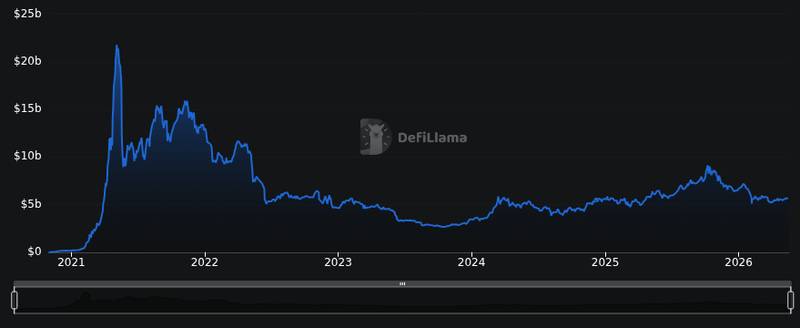
The approach matters because BSC is not a low-activity chain. DefiLlama data shows BSC currently carries $5.481 billion in total value locked, a $13.851 billion stablecoin market cap, and 15.15 million transactions over the last 24 hours. A 40% throughput ceiling reduction at that scale would be operationally significant without further optimization.
What BSC Users, Validators, and the Upgrade Roadmap Face Next
If similar conditions reached production, the throughput ceiling would tighten the margin between BSC’s capacity and its daily transaction load. Users could see slower confirmation times during peak congestion, and fee sensitivity would increase as validators process fewer transactions per block. The widening of P99 finality to 11 slots suggests that cross-region validators would bear the heaviest burden.
Validators would also face higher bandwidth and storage demands. A jump from 130 KB to 2 MB per block at moderate throughput means infrastructure costs rise substantially, potentially concentrating the validator set among better-resourced operators. This echoes broader concerns about infrastructure centralization across high-throughput chains.
What Needs to Improve Before Broader Deployment
The pqSTARK aggregation path is promising on paper but unproven at mainnet scale. BNB Chain will need to demonstrate that proof generation latency does not introduce its own bottleneck, and that the 43:1 compression ratio holds under adversarial network conditions rather than just benchmarks.
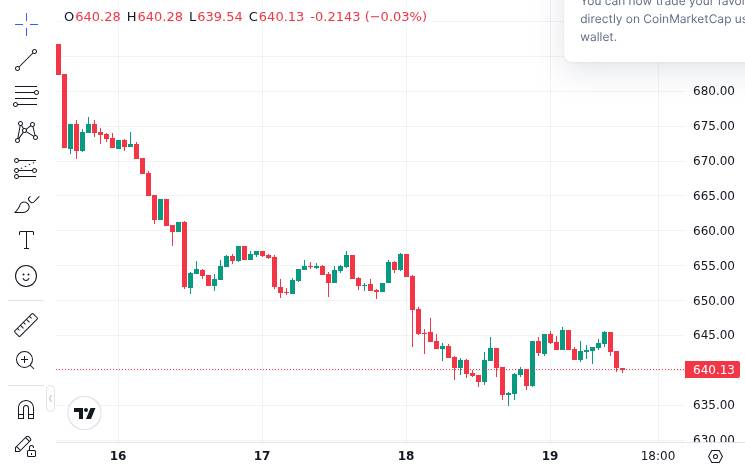
The broader crypto market context adds no urgency to rush the migration. BNB traded at $640.17 with a market cap of $86.2 billion, relatively stable with a 0.34% gain over 24 hours. The Fear & Greed Index sat at 25, reflecting extreme fear across the market, though the sentiment is driven by macro factors rather than BSC-specific concerns. Recent spot Bitcoin ETF outflows and sustained weekly redemption patterns underscore the risk-off environment.
The test results are an early signal about the real cost of quantum-resistant security on high-throughput chains, not evidence that BSC’s post-quantum migration is unworkable. BNB Chain’s next step will be demonstrating whether pqSTARK aggregation and further protocol tuning can close the performance gap before any mainnet rollout is scheduled.
Disclaimer: This article is for informational purposes only and does not constitute financial or investment advice. Cryptocurrency and digital asset markets carry significant risk. Always do your own research before making decisions.