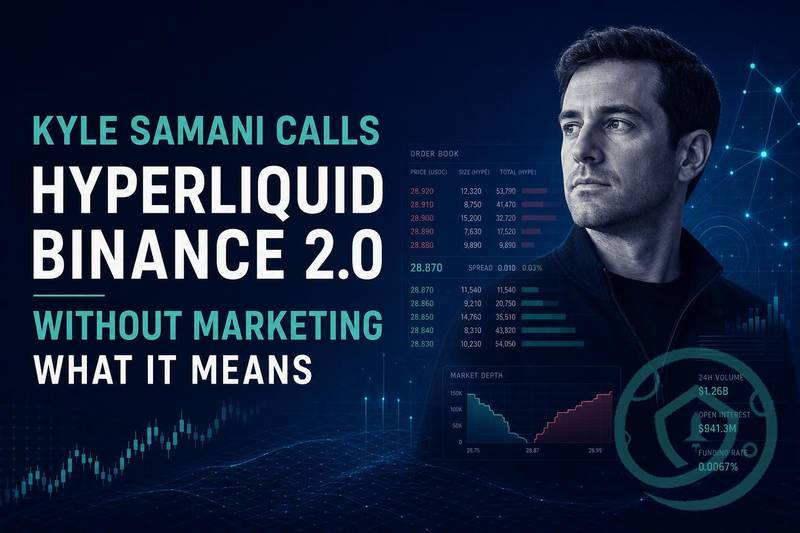
Former Multicoin Capital co-founder Kyle Samani reportedly compared Hyperliquid to “Binance 2.0 without a marketing team,” a characterization that frames the decentralized perpetuals exchange as a serious contender against the world’s largest centralized trading platform.
What Kyle Samani’s ‘Binance 2.0’ Comparison Says About Hyperliquid
Kyle Samani co-founded Multicoin Capital, one of the most prominent crypto-native venture firms. His public commentary on protocols and market structure carries weight among traders and allocators who track venture-backed positioning in the space.
The “Binance 2.0” label implies that Hyperliquid has reached a level of product capability, performance, and breadth that parallels what Binance built during its rise to dominance. The “without a marketing team” qualifier suggests this growth has been organic rather than driven by promotional spend.
What Is Explicit vs. What Is Inferred
The explicit claim is narrow: Samani sees functional parallels between Hyperliquid and Binance, paired with a notable absence of traditional marketing efforts. This is a product-quality endorsement from a well-known investor.
What remains inferred is the scope of the comparison. “Binance 2.0” could reference execution speed, trading pair coverage, liquidity depth, or the broader ambition to become a full-stack exchange. Samani did not publicly specify which dimensions he weighted most heavily. Traders can monitor Hyperliquid’s protocol activity on DeFiLlama for context on its current scale.
Market Implications for Traders and Competing Exchanges
KEY POINTS
- High-profile investor commentary can shift trader attention and capital flows toward named protocols.
- The comparison positions Hyperliquid against centralized incumbents, not just other DeFi perpetuals platforms.
- Organic growth without marketing spend, if sustained, signals strong product-market fit.
Near-Term Sentiment Effects
When a figure with Samani’s profile makes a bold comparison, it tends to amplify short-term attention on the named asset. Traders monitoring social sentiment may see increased discussion around the HYPE token and Hyperliquid’s protocol metrics, even without new fundamental developments.
This kind of narrative-driven attention can create temporary volume spikes. However, it does not on its own change the protocol’s underlying fundamentals or competitive position.
Medium-Term Competitive Positioning
The more consequential question is whether Hyperliquid can sustain the trajectory that prompted the comparison. Centralized exchanges like Binance benefit from established liquidity networks, fiat on-ramps, and regulatory relationships that decentralized platforms are still building.
Hyperliquid’s growth amid a broader wave of institutional interest in crypto infrastructure, including developments like recent movements in U.S. spot Bitcoin ETFs, reflects a market increasingly comfortable with on-chain trading venues.
The comparison also arrives as the crypto industry navigates shifting regulatory landscapes and expanding use cases. Platforms operating at the intersection of AI, payments, and compliance are redefining what exchange infrastructure looks like, adding context to why Samani’s framing resonated with market participants following broader industry developments.
For competing decentralized exchanges, the “Binance 2.0” label sets a benchmark. It signals that at least one prominent investor views the perpetuals DEX category as capable of matching centralized exchange performance, not merely serving as an alternative for users seeking self-custody.
Disclaimer: This article is for informational purposes only and does not constitute financial or investment advice. Cryptocurrency and digital asset markets carry significant risk. Always do your own research before making decisions.