
Reports that the Drift hack cost about $285 million have turned a Solana exploit into a broader confidence test for DeFi, because the incident hit while market sentiment was already weak and because Drift's own explanation points to a governance-layer takeover rather than a routine smart-contract flaw.
Key Points
- On April 1, 2026, Drift warned users not to deposit funds after spotting unusual protocol activity, then said in a later April 1 update that it was under active attack and had suspended deposits and withdrawals.
- Decrypt reported an unofficial drain estimate of about $285.3 million, but Drift's reviewed public updates had not published a final confirmed loss total as of April 2, 2026.
- Drift Trade TVL fell to about $23.24 million with a roughly 92.53% one-day drop, while the Crypto Fear & Greed Index sat at 12, or Extreme Fear.
What Happened in the Reported Drift Hack
Drift first warned of unusual activity on April 1, 2026 and told users not to deposit while it investigated. In a later April 1 incident update, the protocol said it was experiencing an active attack and had suspended deposits and withdrawals while coordinating with security firms, bridges, and exchanges.
In its April 2 explanation, Drift said the attacker used a novel durable-nonce technique that rapidly seized the protocol's Security Council administrative powers. That wording matters because the team framed the breach as a social-engineering and privileged-access event, not a simple bug in trading logic.
Confirmed vs. Open Questions
- Confirmed: the early warning on April 1, the later attack response and withdrawal freeze, and the durable-nonce Security Council takeover disclosed on April 2.
- Open: the exact final loss total, the full independently verifiable on-chain trail, and how much user capital can ultimately be recovered once a full postmortem is published.
Decrypt's outside estimate of the drain is still useful because it establishes the event as a nine-figure exploit, but it is not the same thing as a protocol-confirmed final ledger. That distinction is important in a fast-moving security story, where early monitoring alerts often travel faster than a forensic accounting.
Readers following the wallet side of the story have already seen AICryptoCore's earlier note on a Drift-related address flagged for unusual activity, but address alerts are narrower than a completed incident report. The stronger verified timeline remains the sequence from Drift's own warning, to its attack suspension notice, to its durable-nonce explanation.
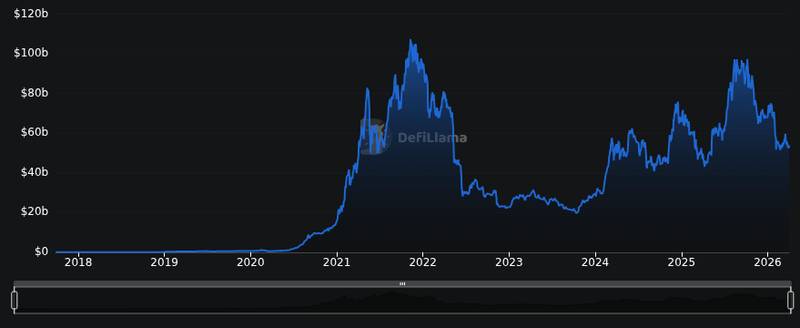
Liquidity damage was easier to verify than the final theft total. DeFiLlama showed Drift Trade at about $23.24 million in TVL with a roughly 92.53% one-day decline in the research snapshot, a collapse consistent with users and counterparties pulling back once admin control appeared compromised.
Why the Attack Could Matter for Bear-Market DeFi
Short-Term Shock Is Visible in Liquidity and Sentiment
The broader market backdrop was already fragile. The Fear & Greed Index reading of 12 out of 100 showed Extreme Fear, while AICryptoCore was also tracking $174 million in U.S. spot Bitcoin ETF net outflows on April 1 and Bitcoin apparent demand weakening at the end of March. In that setting, a governance-layer exploit was more likely to deepen caution than to be dismissed as an isolated venue accident.
DRIFT traded around $0.0462, down about 35.52% over 24 hours, with market cap near $26.89 million and 24-hour volume around $29.53 million in the research snapshot. Paired with the 92.53% TVL collapse, that token move shows confidence leaving both the venue and its native asset at the same time.
The combination of Drift's Security Council takeover explanation and the one-day TVL collapse is also relevant for the AI-crypto stack. Automated market-making bots, agentic treasury tools, and cross-chain execution systems can optimize routing, but they still inherit signer and governance assumptions from the protocols they touch.
Longer-Term Damage Depends on the Postmortem
Calling the incident a fatal blow to DeFi goes further than the available evidence supports right now. What is established is the durable-nonce and social-engineering explanation, the drop to roughly $23.24 million in Drift Trade TVL, and the absence of a protocol-issued final confirmed loss total in the reviewed updates.
That nuance matters because bear markets are defined as much by trust as by price. The data point that argues for wider damage is the mix of Extreme Fear at 12, the 35.52% DRIFT sell-off, and the venue's 92.53% one-day TVL collapse, because those metrics show users, traders, and liquidity providers all stepping back together.
The exploit has already spilled into adjacent trust debates, including criticism of Circle's USDC response during the Drift exploit, which widened the discussion from one protocol's internal controls to the speed of centralized infrastructure intervention. If Drift's postmortem can clearly explain the signer failure and recovery path, the episode may remain a severe but isolated crisis; if it cannot, the bear-market reading will harden into a sector-wide warning about operational security in on-chain finance.
No regulator filing or enforcement action appeared in the reviewed evidence by April 2, 2026. The next concrete milestones are Drift's deeper accounting, any recovery disclosures, and whether automated liquidity returns after traders can compare the early outside estimate with the final audited loss.
Disclaimer: This article is for informational purposes only and does not constitute financial or investment advice. Cryptocurrency and digital asset markets carry significant risk. Always do your own research before making decisions.