
A European Central Bank working paper has found that DeFi governance is far more concentrated than the sector's decentralization ethos suggests, with the top 100 wallet addresses controlling more than 80% of governance token supply across four major protocols.
ECB Working Paper No. 3208, titled "Who to regulate? Identifying actors within DeFi's governance," examined on-chain governance data for Aave, MakerDAO, Ampleforth, and Uniswap. The findings paint a picture of protocols where a small number of addresses wield outsized influence over decision-making, raising questions about whether "decentralized" is an accurate description of how these systems actually operate.
What the ECB Paper Actually Found About DeFi Governance
KEY POINTS
- Top 100 holders across all four studied protocols collectively control over 80% of governance token supply
- Voting power is even more concentrated than token ownership, with as few as 20 voters commanding up to 96% of proxy voting rights
- Regulatory implication: the ECB characterizes some protocols as "pseudo-DeFi," suggesting decentralization is "form over substance" and challenging MiCA's exemption for fully decentralized services
The concentration numbers are stark. In Aave and Uniswap, the top 5 holders control nearly half of all governance tokens. In Ampleforth, the top 5 hold approximately 60%. Roughly half or more of these holdings are linked to the protocols themselves or to centralized and decentralized exchanges.
Voting power tells an even sharper story. In Ampleforth, the top 20 voters account for approximately 96% of proxy voting rights. MakerDAO's top 10 voters hold 66% of delegated votes. At Uniswap, the top 18 voters hold 52% of delegated votes, with venture capital firm a16z identified as the protocol's leading single delegate voter.
Approximately one-third of top voters across the studied protocols cannot be publicly identified or linked to their token holdings. Binance was identified as holding the largest centralized exchange governance position among the protocols studied.
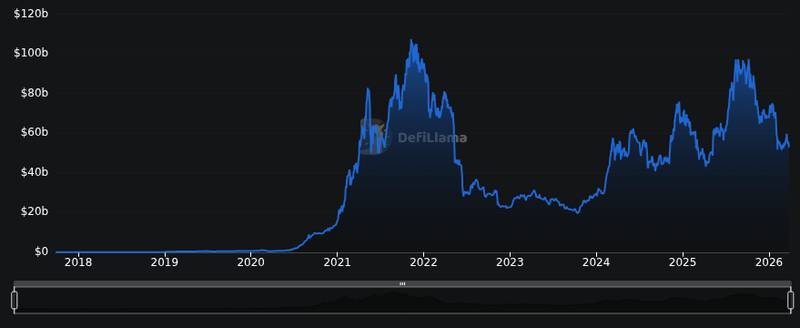
Uniswap alone holds approximately $2.16 billion in total value locked on Ethereum, with additional liquidity spread across Arbitrum ($257 million), Base ($362 million), Polygon ($53 million), and more than 20 other chains. The scale of assets governed by these concentrated voting structures underscores why the ECB views this as a systemic concern, not merely an academic curiosity.
Kavi Jain of Bitwise noted that many large DeFi protocols were not as decentralized in practice as they might appear, especially in earlier stages, where a small group still has meaningful influence over decisions.
Why DeFi's Decentralization Claims Are Under Scrutiny
The ECB paper goes beyond simply documenting concentration. It introduces the term "pseudo-DeFi" to describe protocols that claim decentralization while maintaining governance structures dominated by a handful of participants. The researchers argue that in these cases, decentralization functions as "form over substance."
This framing has direct regulatory consequences. The EU's Markets in Crypto-Assets (MiCA) regulation exempts DeFi services "provided in a fully decentralised manner without any intermediary." If protocols like Aave, Uniswap, MakerDAO, or Ampleforth cannot demonstrate materially dispersed and accountable governance, their DAOs may be forced into the same licensing, capital, and compliance obligations as centralized crypto-asset service providers.
The paper identifies specific regulatory anchor points that EU supervisors could target: core developers, protocol treasuries, and exchange listings. These control points exist regardless of how the protocol brands itself, and the ECB suggests they could serve as footholds for banking-level scrutiny of DeFi governance structures.

The tension between on-chain reality and decentralization branding is not new. Governance votes by concentrated token holders have driven major protocol decisions, including treasury allocations and parameter changes, in ways that resemble traditional corporate governance more than the permissionless ideal that DeFi markets itself on.
According to unconfirmed reports from secondary media coverage, the ECB paper also recommends improving on-chain transparency, clarifying legal status for DAOs (drawing on experiments such as Wyoming's DAO LLC framework), and adopting hybrid regulatory models. These specific recommendations have not been independently verified against the primary document.
For protocols that have built multi-billion-dollar ecosystems on the premise of decentralized control, the ECB's findings pose a concrete challenge. As regulatory frameworks tighten globally, the gap between governance token distribution and actual voting behavior will increasingly determine which protocols qualify for DeFi exemptions and which face the full weight of traditional financial compliance requirements.
ECB working papers do not represent official policy positions, but they frequently inform EU supervisory discussions. With MiCA now in effect and enforcement details still being refined, the paper's data-driven challenge to DeFi's decentralization claims arrives at a moment when regulators are actively deciding where to draw the line.
Disclaimer: This article is for informational purposes only and does not constitute financial or investment advice. Cryptocurrency and digital asset markets carry significant risk. Always do your own research before making decisions.