
Solana Foundation has launched Solana Agent Skills, a developer-facing catalog of prebuilt components designed to let AI agents plug into Solana workflows more quickly, a move that pushes the network deeper into the market for agent infrastructure instead of treating AI as a branding layer alone.
Key Points
- Solana's official skills page presents Solana Agent Skills as pre-built modules for AI agents building on the network.
- The catalog separates Foundation-maintained Official Skills from Community Skills that are not endorsed by Solana Foundation.
- A Foundation GitHub repository already points developers to an installable Claude Code skill, suggesting the rollout includes usable tooling, not only a landing page.
The official Solana Agent Skills page describes the offering as pre-built skills for AI agents building on Solana, and says developers can drop those components into agents so they can work with Solana programs, tokens, tooling, and DeFi protocols.
The same Solana product page splits the catalog between Official Skills maintained by Solana Foundation and Community Skills that are community-contributed and not Foundation-endorsed. That separation matters because agents that touch wallets, swaps, or protocol actions need a visible trust boundary before developers automate execution.
How the launch turns agent tooling into a concrete developer surface
Solana Foundation's solana-dev-skill repository describes the package as a comprehensive Claude Code skill for modern Solana development and includes a one-command install path, npx skills add https://github.com/solana-foundation/solana-dev-skill. That makes the launch more tangible than a generic AI narrative because at least one Foundation-maintained skill is already packaged for developer use.
The practical significance is still an inference, not a confirmed adoption result: because the skills page says these modules give agents context for programs, tokens, tooling, and DeFi protocols, the likely benefit is less repeated integration work for teams building agent-driven products on Solana.
Because the Solana skills page centers on reusable modules instead of bespoke agent frameworks, the rollout fits a broader tooling trend across crypto stacks. AI Crypto Core's coverage of Ethereum's latest effort to reduce Layer 2 fragmentation and Aave v4's rollout shows other ecosystems are also trying to shrink developer complexity rather than asking builders to stitch every workflow together manually.
Why the timing matters for Solana's AI-ready infrastructure pitch
Solana is not launching the registry in an empty ecosystem. The chain still held $12.04 billion in DeFi TVL at the time of research, giving the new agent-skill layer a large existing base of protocols and liquidity to point developers toward.
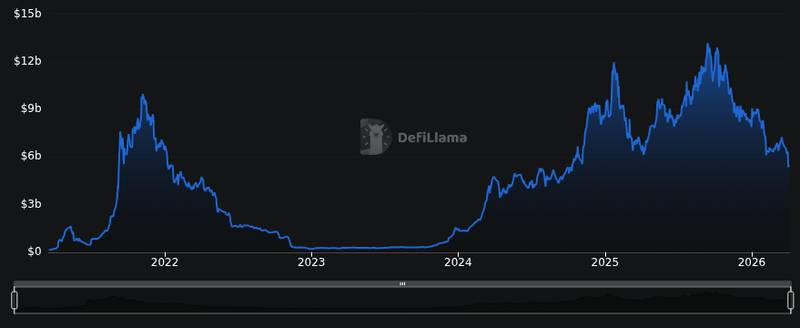
That scale is why the launch reads as infrastructure news more than token marketing. If developers can attach prebuilt agent actions to an ecosystem already supporting $12.04 billion in DeFi TVL, the integration shortcut matters more than another high-level claim about AI compatibility.
Chainalysis added a second signal in a March 24, 2026 post, saying Chainalysis KYT had been integrated into the AI-ready Solana Developer Platform and naming Mastercard, Worldpay, and Western Union as launch users. That suggests Solana's agent push is being presented alongside compliance and enterprise payment rails, not as a separate experimental track.
"we’re giving institutions access to battle-tested blockchain intelligence and real-time compliance tooling right where they build"
Catherine Gu, Chainalysis
The combination of the official skills registry and the enterprise compliance integration matters for automation because agent builders need both execution surfaces and guardrails. That same convergence is showing up elsewhere in the market, from Charles Schwab's planned Bitcoin and Ethereum trading access to AI Crypto Core's report that the tokenized asset market reached $27.65 billion in April 2026.
Wu Blockchain summarized that broader framing in a March 26, 2026 post that cast Solana as infrastructure for the "agentic internet," echoing how the network is now marketing reusable skills, payment rails, and compliance tooling as parts of the same builder stack.
Solana Positioned as Core Infrastructure for “Agentic Internet” as AI Agent Payments Near 15 Million
— Wu Blockchain (@WuBlockchain) March 26, 2026
The Solana Foundation stated that Solana is being positioned as core infrastructure for the “agentic” internet. The network has processed approximately 15 million on-chain…
What developers should watch after the initial launch
The next concrete test is whether the Official Skills catalog expands meaningfully while the Community Skills section grows without blurring the distinction between endorsed and non-endorsed modules. That split is one of the few clearly defined operating rules on the launch page, so it will shape how much trust developers place in agent actions that touch real assets.
A second signal is whether more infrastructure vendors join the same platform layer described by Chainalysis' Solana Developer Platform integration note. If Solana keeps pairing agent skills with compliance, payments, and developer tooling, it will strengthen the case that AI agents on crypto rails need auditable interfaces, not just faster prompts.
For now, the launch case rests on the live skills registry and the Foundation repository, not published adoption metrics. That narrower evidence base is enough to confirm that Solana Foundation has opened a real agent-skills registry and a Foundation-maintained install path, but not enough to prove ecosystem uptake yet.
Disclaimer: This article is for informational purposes only and does not constitute financial or investment advice. Cryptocurrency and digital asset markets carry significant risk. Always do your own research before making decisions.