

Vitalik Buterin’s Fast Confirmation Rule Could Speed Ethereum Finality
Vitalik Buterin introduced a fast confirmation rule for Ethereum aimed at giving users a quicker non-revert guarantee and clearer transaction finality.


Vitalik Buterin has introduced a fast confirmation rule for Ethereum that could give users a hard guarantee their transactions will not revert after just one slot, or roughly 12 seconds, replacing a finality wait that currently stretches to around 13 minutes.
Buterin outlined the mechanism in a March 18 post on X, writing that “a new fast confirmation rule mechanism lets you get a hard guarantee that Ethereum will not revert after one slot (12 seconds).” He added that the guarantee depends on two stated conditions: an honest supermajority of validators and network latency below roughly three seconds.
A new fast confirmation rule mechanism lets you get a hard guarantee that Ethereum will not revert after one slot (12 seconds)
Security assumptions are (i) supermajority honest, (ii) network latency under ~3s. So one step below economic finality, but very strong for many use…
— vitalik.eth (@VitalikButerin) March 18, 2026
Source: @VitalikButerin on X
What the Fast Confirmation Rule Changes for Ethereum Users
Under Ethereum’s current consensus design, users and applications typically wait 13 to 19 minutes for a transaction to reach full economic finality. During that window, there is a theoretical possibility that the chain could reorganize and reverse recent blocks. The Fast Confirmation Rule, or FCR, is designed to shrink that uncertainty to a single slot.
According to the Ethereum Foundation, FCR is meant to provide fast and strong L1 confirmations in roughly 15 to 30 seconds instead of the usual multi-minute finality wait. The Foundation targeted Q1 2026 for initial client availability.
A “non-revert guarantee” means that once the rule’s conditions are satisfied, the network treats the confirmed block as settled. Users do not need to wait for additional epochs of validator attestations before considering a payment or deposit final. This is distinct from full economic finality, which carries stronger penalties for any validator that attempts to reverse the chain, but the practical result for most users is the same: faster certainty.
An official explainer published by the Ethereum Foundation puts the target deposit time with FCR at about 13 seconds, a roughly 98% reduction from the current ~13-minute finality wait. Critically, the explainer notes that nodes run the rule locally, so FCR does not require a hardfork. Any application can consume it through an API endpoint on an Ethereum node running FCR.
The mechanism works by analyzing validator attestations in real time rather than relying on fixed k-deep block counting, according to Cointelegraph reporting on client teams that were actively testing the opt-in feature.
Why Faster Non-Revert Assurances Matter for Wallets, dApps, and Exchanges
Exchange Deposits and Withdrawals
Centralized exchanges are among the most immediate beneficiaries. Most major platforms currently require between 20 and 70 block confirmations before crediting an Ethereum deposit, a precaution against chain reorganizations. If exchanges adopt FCR and trust its guarantee, deposit credit times could drop from minutes to seconds. This matters on days of heavy market activity, such as Binance’s $2.2 billion USDT net inflow recorded on March 18, when deposit speed directly affects traders’ ability to act on price moves.
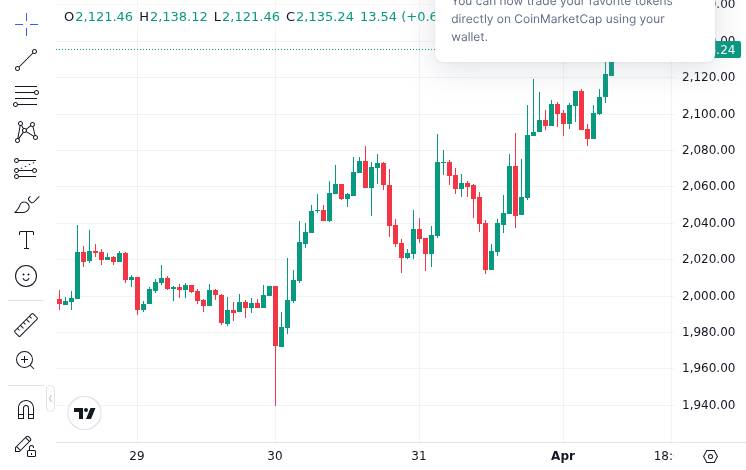
ETH was trading at $2,135.55 at press time, up 3.83% over the prior 24 hours, with a market cap near $257.9 billion.
DeFi and Layer-2 Bridges
Decentralized applications that rely on transaction finality for settlement, including lending protocols, DEX aggregators, and cross-chain bridges, currently build in their own confirmation buffers. These buffers add latency and complexity. A 12-second non-revert guarantee would let smart contracts treat deposits as settled almost immediately, reducing the attack surface for reorg-based exploits on bridges.
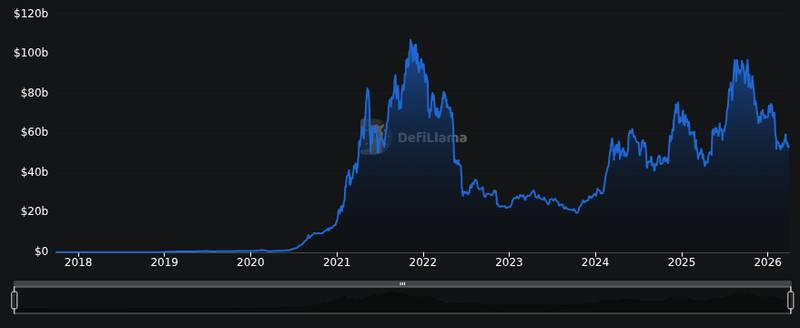
Ethereum remains the dominant chain for DeFi activity by total value locked. Faster confirmation directly reduces the risk window during which bridged assets are vulnerable to double-spend scenarios, a concern that has driven some of the largest exploits in DeFi history.
Wallet User Experience
For everyday users, the shift is straightforward: the “pending” state after sending ETH or interacting with a contract becomes shorter. Wallets that integrate FCR could show confirmed status within seconds rather than displaying a spinner for minutes. This aligns Ethereum’s user experience closer to what centralized payment rails offer, without compromising decentralization.
Open Questions
The guarantee holds only when the two conditions Buterin specified are met: an honest supermajority of validators and sub-three-second network latency. Early public reaction was mixed. Supporters highlighted the UX improvement, while skeptics on X questioned whether those assumptions would hold under stressed network conditions, such as during periods of extreme volatility.
Because FCR is opt-in and runs locally on nodes, adoption will depend on how quickly client teams ship production-ready implementations and how readily exchanges and infrastructure providers integrate the new API. According to the official explainer, the first consensus clients were expected to reach production readiness around the end of Q1 2026, with exchange integration possible in Q2, though that timeline remains unconfirmed.
The broader crypto market sits in a cautious posture, with the Fear & Greed Index at 8, deep in “Extreme Fear” territory. Against that backdrop, infrastructure upgrades that reduce friction for institutional market participants and improve settlement guarantees for traditional finance entities exploring crypto carry added significance, even if their full impact takes quarters to materialize.
Disclaimer: This article is for informational purposes only and does not constitute financial or investment advice. Cryptocurrency and digital asset markets carry significant risk. Always do your own research before making decisions.


