

GRVT Review 2026: Is This Hybrid Perpetual Exchange Worth the Risk?
GRVT may be worth the risk for experienced perpetual traders who want CEX-like execution with self-custody features, but it is not worth the risk for beginners or users looking for a simple on-chain swap.
The reason is straightforward: GRVT is not just a trading interface. It is a trust stack made of market depth, account controls, off-chain execution, ZKsync Validium infrastructure, withdrawal assumptions, and user-side risk management.
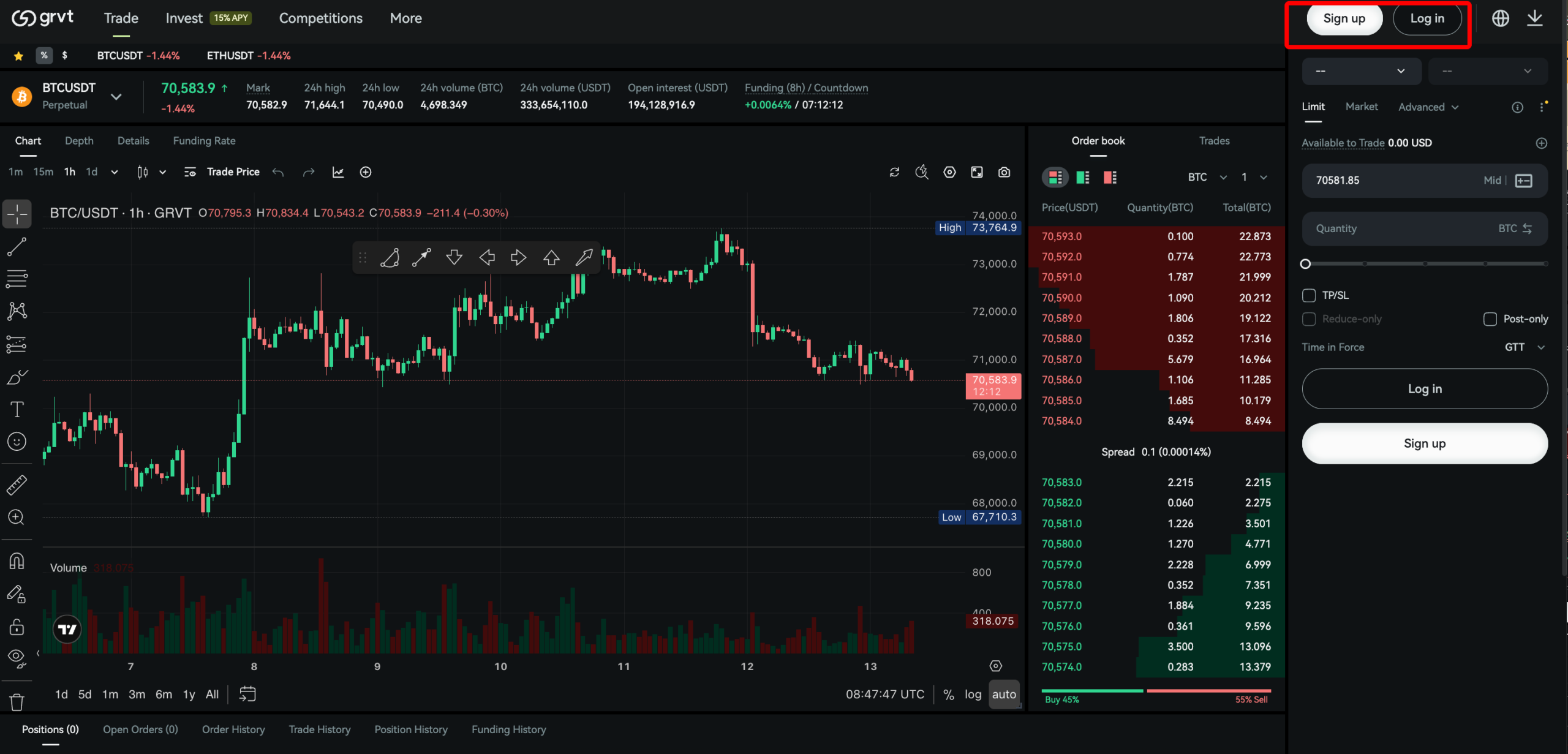
That makes the real review question narrower than “is GRVT good?” A better question is whether the platform’s liquidity, fees, security design, and operational tradeoffs justify using it with real collateral. Based on the available data, GRVT looks credible and active, but only traders who understand leverage, funding, and hybrid infrastructure should treat it as usable beyond small test size.
Table of Contents
What Is GRVT?
GRVT is a crypto derivatives exchange built around perpetual contracts, orderbook trading, RFQ access, and self-custody messaging. Its public site and Help Center describe a regulated, wallet-connected trading environment powered by ZKsync technology. In practice, GRVT feels closer to a professional perps venue than to a token-swap page.
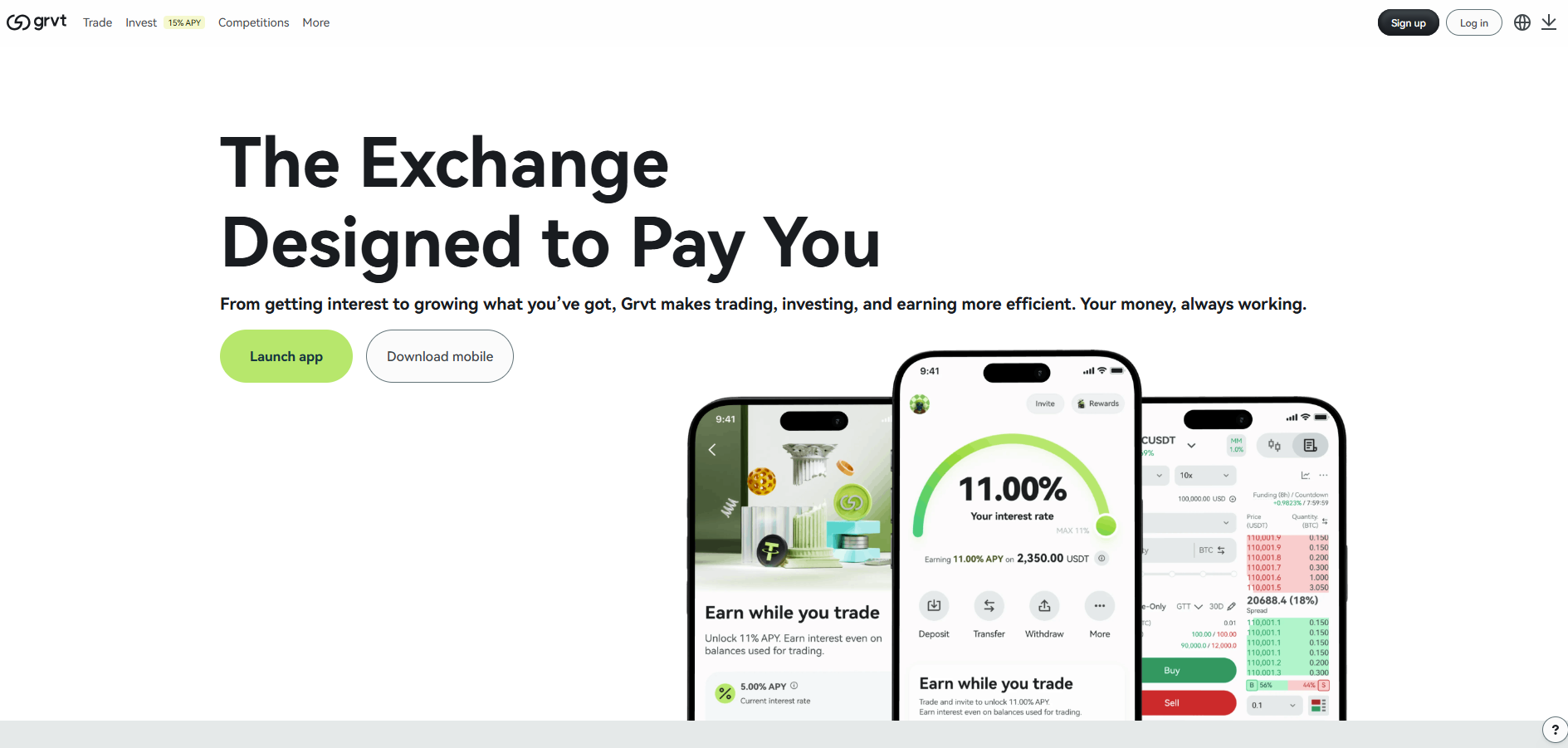
The key distinction is product type. GRVT is not mainly about swapping one token for another. It is about margin, funding, mark prices, collateral movement, bot access, address controls, and liquidation avoidance. That changes the review standard: usability is useful only if the trader understands the trade engine and the exit path.
How GRVT Works
GRVT separates the experience traders see from the infrastructure assumptions underneath. The front end gives a familiar orderbook workflow. The settlement side uses ZKsync-based architecture, while the data-availability model is closer to Validium than a fully data-on-chain rollup. That design can support speed and privacy, but it also introduces dependencies that should be named clearly.
The practical trust chain looks like this: the wallet controls access, the exchange coordinates trading, the market feeds expose prices and depth, the Validium layer supports state validation, and the user still needs a reliable withdrawal route. L2BEAT’s GRVT risk page is useful here because it focuses on transaction filtering, operator roles, and data-availability assumptions. Compare with the ZKsync Validium reference and ethereum.org Validium overview.
Platform Overview and Core Features
| Layer | What GRVT Offers | What a Trader Should Check |
| Trading surface | Perpetual markets, orderbook trading, RFQ venue, funding display. | Order type behavior, slippage, funding cost, liquidation panel. |
| Account controls | Wallet login, email flow, address book, security settings. | 2FA/SecureKey setup, withdrawal whitelist, account recovery path. |
| Market access | Public market feeds and programmatic trading keys. | Rate limits, auth handling, bot failure controls. |
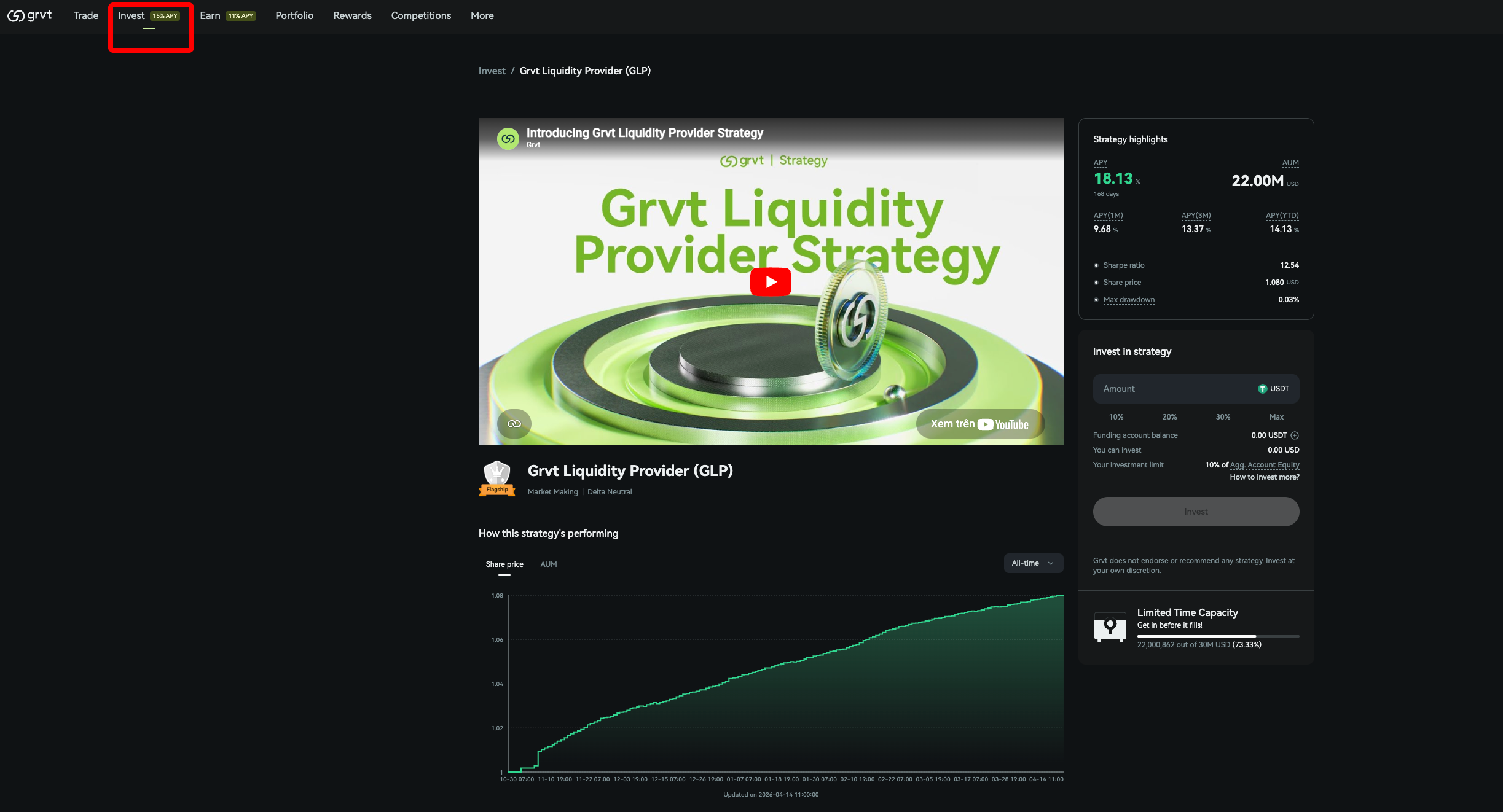
| Yield surfaces | Equity yield prompts and GLP-style liquidity product screens. | Source of yield, downside scenario, withdrawal timing. |
Supported Markets and Trading Options
A May 19, 2026 market-data pull showed 118 active perpetual instruments. Each active instrument in the sample supported ORDERBOOK and RFQ venues. The list included large crypto markets such as BTC, ETH, SOL, XRP, BNB, SUI, HYPE, AAVE, LINK, and ZEC, plus non-crypto or RWA-style tickers such as AAPL, AMD, AMZN, AVGO, BABA, CL, XAU, XAG, XPD, and XPT.
Breadth is not automatically quality. The more varied the market list, the more important it becomes to check oracle behavior, session assumptions, position caps, and whether visible depth actually supports the trade size.
Initial Testing and Platform Interaction
The supplied GRVT file is useful because it captures the actual product path: connect wallet, enter email, land on the dashboard, open account controls, inspect security settings, navigate to Trade, review market categories, scan funding, and view reward or competition surfaces. That sequence matters more than a marketing claim because it shows where a new user will make decisions.
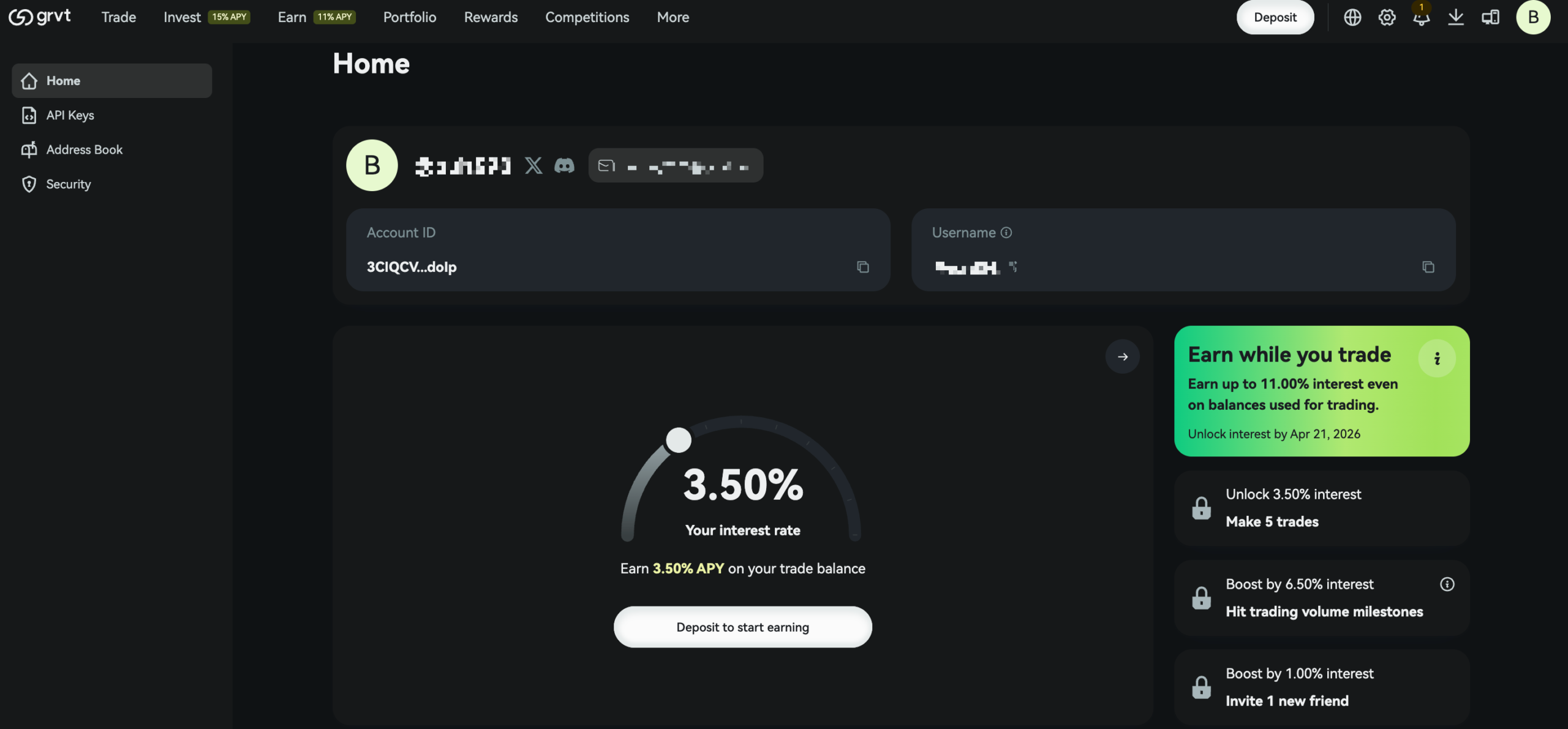
A proper small-capital test should include seven steps: deposit, internal transfer, security setup, tiny maker order, tiny taker order, funding-rate check, and withdrawal. Without those steps, the review should not claim execution quality beyond visible orderbook and interface inspection.
User Experience and Interface Evaluation
GRVT’s interface is clean, but the cleanliness can be deceptive. The screen reduces friction, while the product underneath remains a leveraged derivatives venue. That is not a criticism; it is a warning about user fit. A beginner may see a smooth dashboard. A professional trader sees margin state, funding exposure, execution queue, liquidation distance, and account-control risk.
| UX Element | Helpful Signal | Risk Hidden Behind It |
| Search and categories | Markets are easy to find. | Easy discovery can encourage overtrading long-tail contracts. |
| Dashboard balances | Account state is visible. | Equity, margin, and withdrawable funds are not the same thing. |
| Security page | Controls are accessible. | Controls only help if configured before deposits. |
| Rewards pages | Incentives are visible. | Points and rewards can distort risk sizing. |
Liquidity and Market Depth
The headline liquidity snapshot was strong: about 1.46B USDT in 24-hour quote volume and an estimated 480M USDT open interest across active perpetual markets. The problem is not whether GRVT has activity. The better question is where that activity concentrates.
| Market | 24h Volume | Est. Open Interest | Interpretation |
| BTC_USDT_Perp | 636.31M | 210.23M | Deepest core market in the snapshot. |
| ETH_USDT_Perp | 156.40M | 132.98M | Strong major-market support. |
| HYPE_USDT_Perp | 112.64M | 5.27M | High turnover, thinner positioning base. |
| SOL_USDT_Perp | 67.54M | 36.69M | Active, but depth should be checked by order size. |
| PAXG_USDT_Perp | 59.99M | 23.52M | Useful RWA-style exposure with oracle considerations. |
Data note: these are live market snapshots, not audited financial statements. Recheck figures close to publication or before sizing any trade.
Fees and Trading Conditions
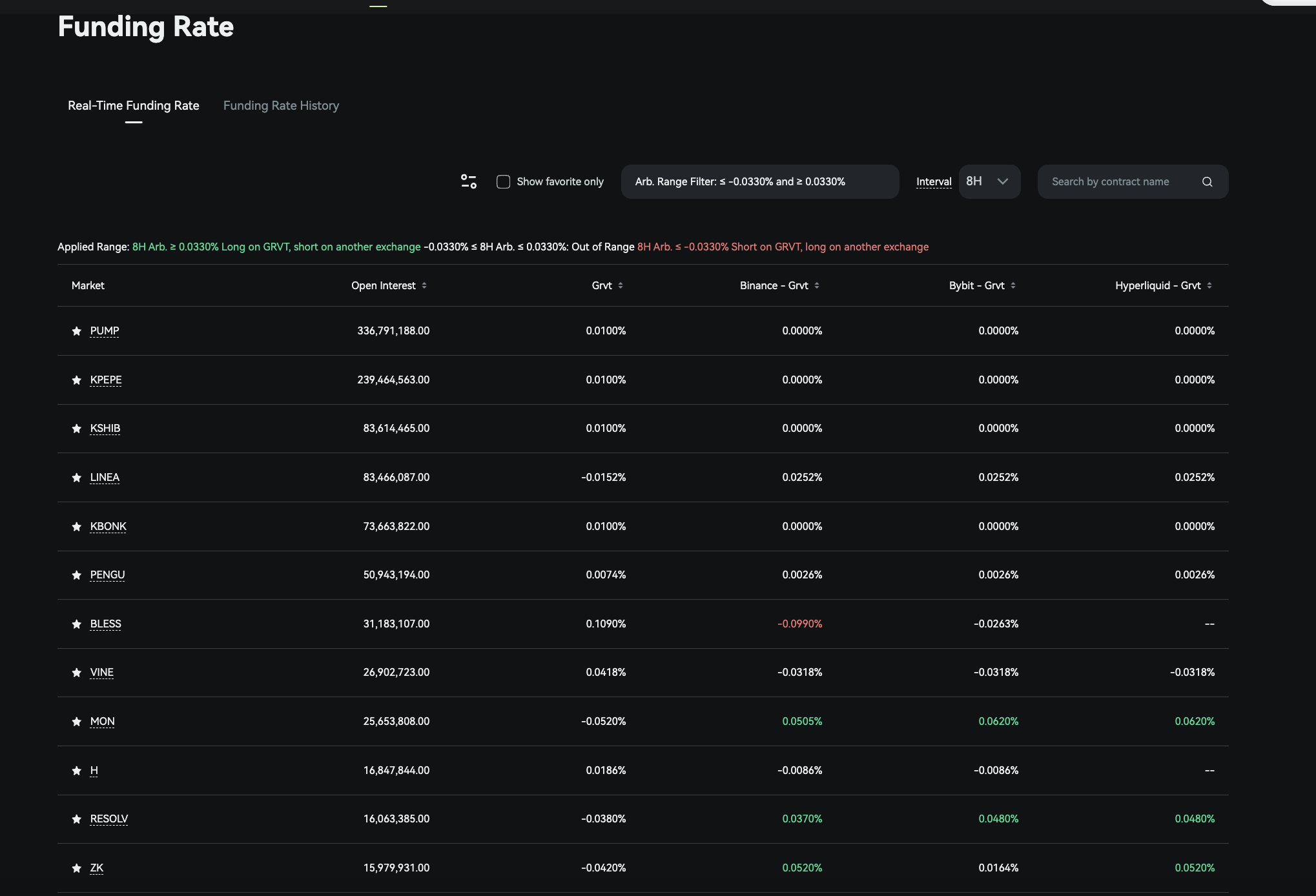
GRVT’s fee schedule is competitive for active traders. The visible futures tier model starts at -0.0001% maker and 0.045% taker, with better rates at higher rolling volume. See the official fee model.
| Cost Item | Why It Matters |
| Maker/taker fees | Visible entry and exit cost. |
| Funding | Recurring cost or income depending on position side. |
| Spread | Immediate execution cost, especially outside BTC/ETH. |
| Withdrawal cost | Operational cost when moving collateral off-platform. |
Transparency and Project Background
GRVT is not opaque in the usual early-exchange sense. It publishes public references, fee schedules, help material, security explanations, and market-data access. That makes external checking possible. The transparency gap is different: users still cannot independently verify every off-chain matching decision, operator action, upgrade path, or data-availability dependency from the interface alone.
This is why the review should not frame GRVT as simply transparent or not transparent. A more accurate wording is: GRVT is transparent about many user-facing mechanics, while its hybrid architecture still requires operational trust.
Security Considerations
The most important security question is not whether GRVT looks professional. It does. The question is where custody, sequencing, data availability, and withdrawal rights sit during stress. GRVT’s own security architecture explains the intended model, while L2BEAT highlights assumptions users should not ignore.
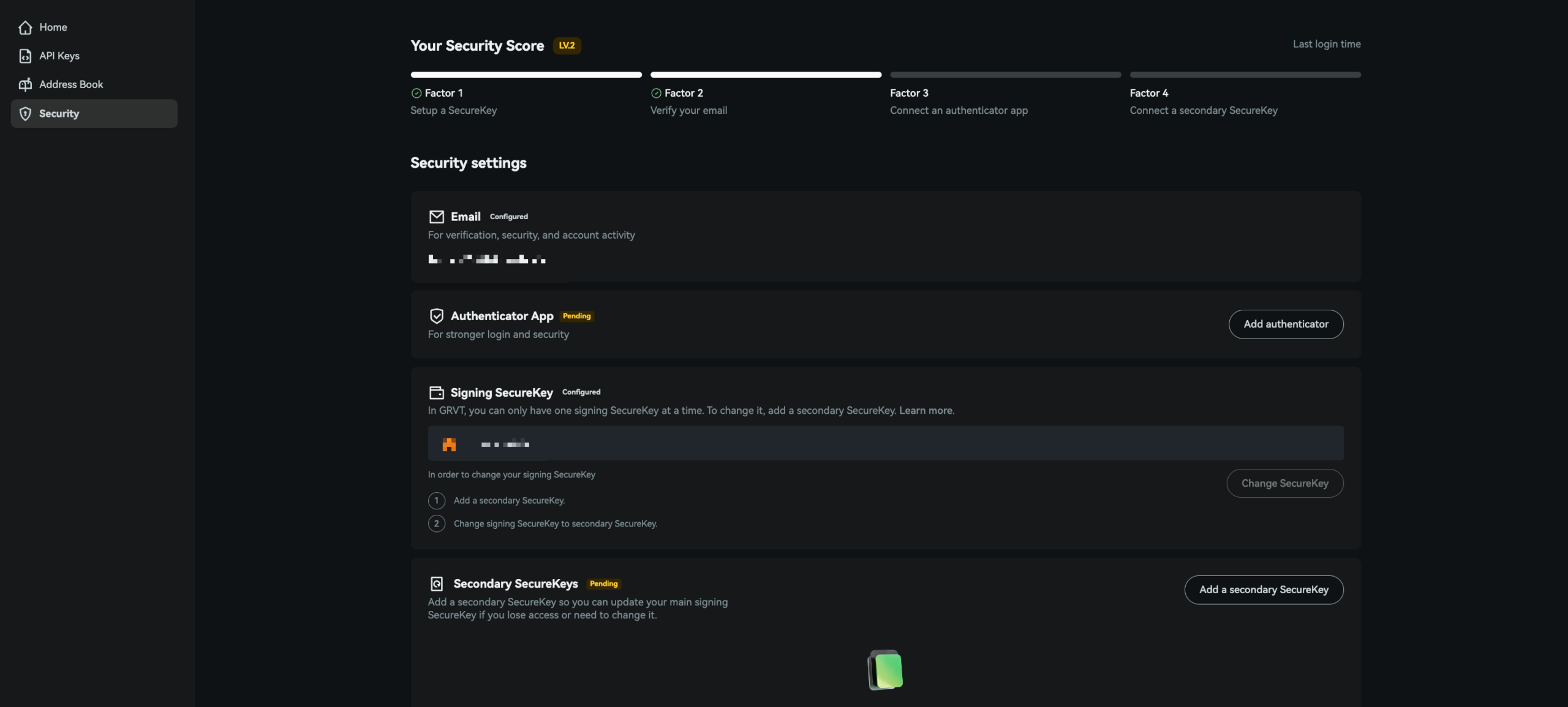
Security context matters beyond one venue, but the GRVT-specific review should stay focused on platform controls: account protection, withdrawal assumptions, operator reliance, and whether the user can reduce loss exposure before market stress happens.
Risks and Red Flags
| Risk | Why It Is Specific to GRVT’s Model | How to Treat It |
| Validium dependency | Data is not fully published on Ethereum. | Understand recovery assumptions before size. |
| Operator reliance | The system is not a simple permissionless AMM. | Assume operational controls matter. |
| Leverage | Small price moves can become liquidation events. | Use isolated tests and conservative sizing. |
| Yield surfaces | GLP and equity-yield prompts add strategy risk. | Do not treat APY as cash-equivalent income. |
| Incentives | Airdrops and competitions can change behavior. | Do not let points decide trade size. |
Who Should Be Cautious When Using GRVT
The cautious group is larger than the skeptical group. A trader can believe GRVT is legitimate and still decide to use small size. Beginners, passive investors, users who only want spot exposure, and anyone uncomfortable with operator or data-availability assumptions should avoid treating GRVT like a normal wallet swap.
Bot traders should test auth handling, rate limits, order cancellation, and fail-safe behavior before live size. Large accounts should test address controls and withdrawals before holding meaningful collateral. Yield seekers should separate trading PnL, funding income, incentives, and liquidity-product risk.
Expert Assessment: Is GRVT Trustworthy?
My assessment is: credible, active, but not low-risk. GRVT has enough public material, visible activity, interface depth, and live market evidence to be taken seriously. The risk is not that it looks unserious. The risk is that a polished product can make a complex trust stack feel simpler than it is.
For experienced derivatives traders, GRVT is worth researching and testing with limited capital. For users who cannot explain funding, margin, Validium assumptions, and withdrawal controls, it is too complex to use casually.
Conclusion
GRVT is one of the more interesting hybrid perps venues because it does not only sell a DeFi story. It offers a real trading interface, broad markets, public market feeds, RFQ/orderbook access, and active liquidity in major pairs. That makes it more substantial than a shallow points-farming venue.
The final verdict is deliberately narrow: GRVT appears technically serious and market-active, but the user must price in Validium data availability, operator reliance, leverage, and incentive-driven behavior. The right first trade is not a large directional bet. It is a small operational test.
FAQs
Is GRVT a pure DEX?
No. It is better described as a hybrid derivatives exchange with self-custody elements and off-chain operational components.
How many markets were active in the snapshot?
The May 19, 2026 market snapshot showed 118 active perpetual instruments.
What is the main advantage?
The main advantage is a CEX-like perps workflow combined with public market feeds and wallet-based account access.
What is the main risk?
The main structural risk is the combination of Validium data availability, operator reliance, leverage, and withdrawal assumptions.
Should beginners use GRVT?
Beginners should start on testnet or avoid it until they understand funding, margin, liquidation, and account controls.
Cryptocurrency and digital asset markets carry significant risk. Always do your own research before making decisions.


