
Arthur Hayes Says Bitcoin May Have Bottomed at $60,000 in New Essay
Arthur Hayes’ new essay argues Bitcoin’s drop to $60,000 may have marked the low, while warning BTC could still fall further if stocks weaken.


Arthur Hayes, co-founder of BitMEX, published a new essay arguing that Bitcoin’s drop from $126,000 to $60,000 may have already marked the cycle low, while cautioning that further downside remains possible if traditional markets weaken.
What Arthur Hayes Actually Said in His New Bitcoin Essay
Hayes published the essay titled “This Is Fine” on February 17, 2026, laying out two distinct scenarios for Bitcoin’s near-term trajectory. In the first, the dump from $126,000 to $60,000 was the entire downward move. In the second, Bitcoin falls further as equities come under pressure.
KEY POINTS
- Hayes framed $60,000 as one possible completed low, not a guaranteed bottom.
- His bearish scenario ties Bitcoin weakness to a potential AI-driven credit crisis that could force $330 billion in consumer credit losses.
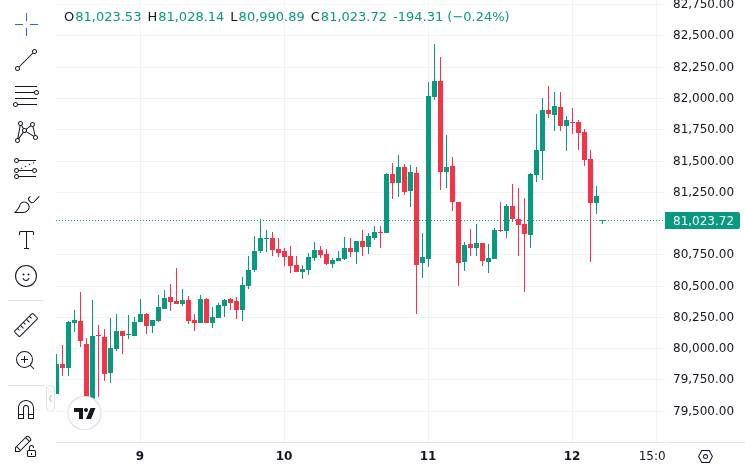
- Bitcoin currently trades near $81,025, well above the $60,000 level, while the Fear & Greed Index sits at a neutral 49.
The essay’s central thesis frames Bitcoin as a “fiat liquidity fire alarm.” Hayes argued that Bitcoin’s underperformance relative to the Nasdaq 100 signals a possible deflationary credit event ahead, driven by AI-related job displacement rippling through consumer lending markets.
Under that scenario, Hayes projected $330 billion in consumer credit losses and $227 billion in mortgage debt losses. He estimated the combined shock would amount to a 13% write-down against U.S. commercial bank equity capitalization.
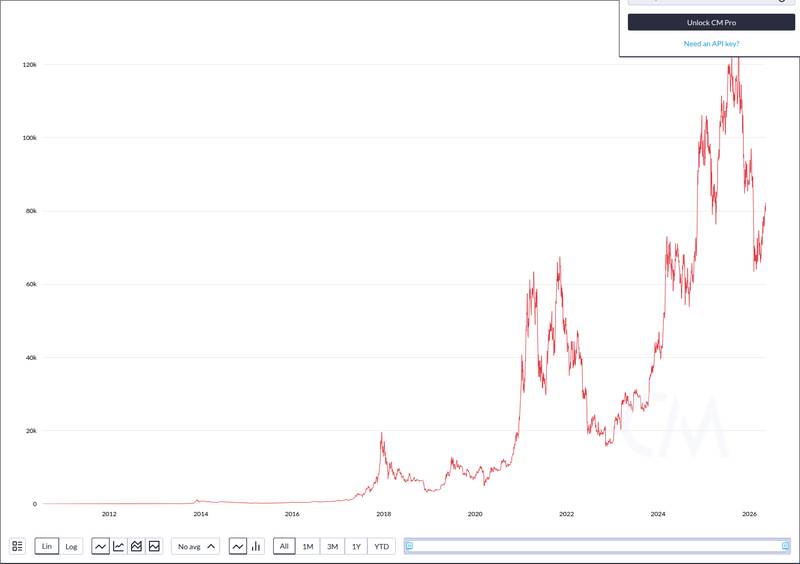
The nuance matters. Hayes did not make a categorical bottom call at $60,000. He presented it as one branch of a conditional framework, explicitly acknowledging that Bitcoin could fall further if stocks weaken. Coverage from Decrypt on February 18 confirmed this reading, describing the essay as a two-scenario setup rather than a definitive prediction.
The distinction is relevant for traders who may have interpreted headlines as a firm bottom signal. Hayes’s own words suggest uncertainty, not conviction, about whether the worst is over. This framing echoes the cautious positioning seen in other recent macro analyses, including Michael Saylor’s comments on Strategy’s ongoing Bitcoin accumulation, where conviction exists alongside acknowledgment of downside risk.
Why the $60,000 Thesis Matters for Bitcoin Now
Bitcoin traded at $81,025 at press time, roughly 35% above the $60,000 level Hayes identified as a potential floor. The 24-hour price change was a modest 0.41%, reflecting a market in holding pattern rather than decisive recovery.
The Fear & Greed Index reading of 49, labeled “Neutral,” reinforces the ambiguity. Historically, universally accepted cycle bottoms tend to coincide with extreme fear readings in the single digits or teens. A neutral reading suggests the market has not yet reached the kind of capitulation that typically validates a durable floor.
Hayes’s bullish case hinges on what comes after a potential credit shock, not on current conditions. He argued that renewed fiat credit creation by the Federal Reserve in response to a banking crisis would ultimately push Bitcoin to a new all-time high. The logic follows his long-standing thesis that central bank liquidity injections are the primary driver of crypto rallies.
That sequence, crisis followed by monetary expansion followed by Bitcoin surge, remains hypothetical. The AI-driven displacement scenario Hayes described has not yet materialized in official economic data, and the Federal Reserve has not signaled the kind of emergency lending programs his thesis requires. Meanwhile, broader crypto market developments continue on parallel tracks, with projects like Ethereum’s Glamsterdam upgrade and infrastructure shifts such as Ronin’s migration to an OP Stack Layer 2 proceeding independently of macro uncertainty.
For now, the $60,000 level serves as a reference point in a conditional framework, not a confirmed support level. Whether Hayes’s thesis plays out depends on variables, from Federal Reserve policy to AI labor market effects, that remain unresolved.
Disclaimer: This article is for informational purposes only and does not constitute financial or investment advice. Cryptocurrency and digital asset markets carry significant risk. Always do your own research before making decisions.


