
Paradigm researcher Dan Robinson has published a proposal for Provable Address-Control Timestamps, or PACTs, a framework designed to let Bitcoin holders preserve off-chain evidence of ownership over vulnerable UTXOs in case quantum computing eventually threatens the network’s cryptographic foundations.
Robinson’s article on Paradigm’s research blog, titled “PACTs: Protecting Your Bitcoin From a Quantum Sunset,” appeared on May 1, 2026. The proposal outlines how holders could create timestamped proofs of control before any future quantum-risk cutoff date, without moving their coins on-chain.
What Dan Robinson’s PACTs Proposal Says About Bitcoin Ownership Proofs
PACTs are not a live Bitcoin protocol upgrade. They are a proposed standard that would allow a Bitcoin holder to generate a private, verifiable commitment proving they controlled a specific address at a specific time. The concept targets UTXOs whose security could degrade if sufficiently powerful quantum computers emerge.
The illustrative design Robinson describes uses three components: a 256-bit salt, a BIP-322 full message-signing proof, and an OpenTimestamps anchor. The entire commitment stays off-chain, meaning the holder does not need to broadcast a Bitcoin transaction or pay any fees to create a PACT.
“As soon as we agree on a standardized format for PACTs, holders can begin timestamping them.”
— Dan Robinson, Paradigm
The mechanism is designed for a specific scenario: if Bitcoin’s community ever implements an emergency fork that freezes quantum-vulnerable coins, a PACT would serve as pre-cutoff evidence that the legitimate owner controlled those funds. Bankless separately confirmed that PACTs are intended to let quantum-vulnerable addresses recover funds in exactly this type of emergency freeze situation.
Robinson explicitly states that PACTs do not guarantee rescue. Bitcoin may never adopt a quantum-key sunset, and even if it does, there is no certainty this specific recovery path would be chosen.
Why Quantum-Resilient Proofs Could Matter for Bitcoin Holders and Custodians
Bitcoin’s security model relies on the computational difficulty of deriving private keys from public keys. Addresses that have exposed their public key through prior transactions, including many legacy P2PKH addresses, would be the first at risk if large-scale quantum computers become viable.
For self-custody users holding long-term BTC positions, the proposal offers a low-cost hedge. Creating a PACT requires no transaction, no fee, and no exposure of additional on-chain data. Institutional custodians and exchanges managing client funds in older address formats could similarly benefit from generating proofs today as part of forward-looking security planning.
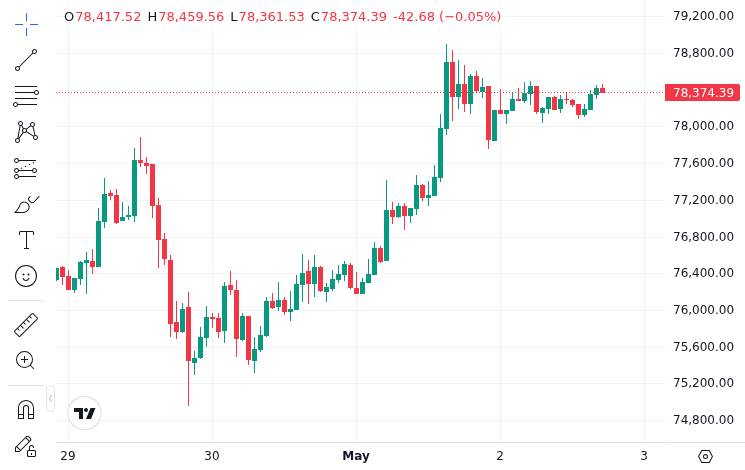
Bitcoin currently trades at $78,370 with a market capitalization of approximately $1.57 trillion, underscoring the scale of value that quantum-resilient ownership frameworks could eventually need to protect.
PACTs sit alongside other quantum preparedness efforts in the Bitcoin ecosystem. BIP-361, titled “Post Quantum Migration and Legacy Signature Sunset,” outlines a phased approach where Phase C would allow quantum-safe recovery of legacy UTXOs via a zero-knowledge proof tied to a BIP-39 seed phrase. The key difference is that PACTs let holders act now, privately and off-chain, while BIP-361 frames recovery around a broader migration requiring consensus-level implementation.
The gap between a research proposal and network-level adoption remains substantial. Any PACT-based recovery path would require community standardization of the format, followed by consensus work to recognize PACTs as valid ownership evidence during a potential emergency fork. Wallet providers would need to integrate PACT generation tools, and the broader developer community would need to agree on verification criteria.
The proposal arrives during a period of broader security awareness in the crypto space. Recent incidents such as the draining of 500 dormant Ethereum wallets highlight how ownership verification remains a live concern across blockchains. Meanwhile, regulatory momentum around digital assets continues, with developments like potential U.S. legalization of crypto perpetuals and stablecoin legislation progress shaping the policy environment in which quantum preparedness standards would eventually operate.
The crypto Fear & Greed Index currently reads 39, reflecting a cautious market where long-term security planning may carry more weight than during euphoric periods.
For now, PACTs remain a proposal awaiting community review and format standardization. Robinson’s contribution shifts the quantum preparedness conversation from abstract timeline debates toward a concrete, actionable step holders could take today, with no on-chain cost and no privacy trade-off.
Disclaimer: This article is for informational purposes only and does not constitute financial or investment advice. Cryptocurrency and digital asset markets carry significant risk. Always do your own research before making decisions.