
Arbitrum Security Council member Griff Green has raised concerns about Aave’s handling of liquid staking tokens, suggesting the leading DeFi lending protocol is too permissive in how it accepts these assets as collateral.
The criticism surfaced in a highlight clip where Green, whose role on the Arbitrum Security Council gives him direct insight into cross-protocol risk management, stated that Aave is “too loose” with liquid staking tokens (LSTs).
Why Griff Green’s Warning Carries Weight
Green is not a casual observer. As an Arbitrum Security Council member, he was directly involved in the decision to freeze $70 million in stolen funds linked to North Korea, working alongside the SEAL 911 emergency response team. That incident demonstrated how DeFi protocols face real security threats that demand proactive risk management.
His criticism of Aave centers on collateral standards for liquid staking tokens. LSTs are derivative tokens representing staked assets (like stETH representing staked ETH) that can be used as collateral in lending protocols. When a protocol is “too loose” with these tokens, it may accept LSTs without adequately accounting for their liquidity risk, depeg potential, or redemption constraints.
What Are Liquid Staking Tokens?
Liquid staking tokens allow holders to earn staking rewards while retaining liquidity. Instead of locking ETH directly in a validator, users deposit into protocols like Lido or Rocket Pool and receive a tradeable token in return.
These tokens typically trade near a 1:1 ratio with the underlying asset but can depeg during market stress. When used as collateral in lending protocols like Aave, a sudden depeg can trigger cascading liquidations if the protocol’s risk parameters are set too loosely.
KEY POINTS
- Speaker: Griff Green, Arbitrum Security Council member
- Criticism: Aave is “too loose” with liquid staking token collateral standards
- Risk angle: Loose LST parameters could expose lenders to depeg and liquidation risk
What This Means for Aave Users and DeFi Risk Standards
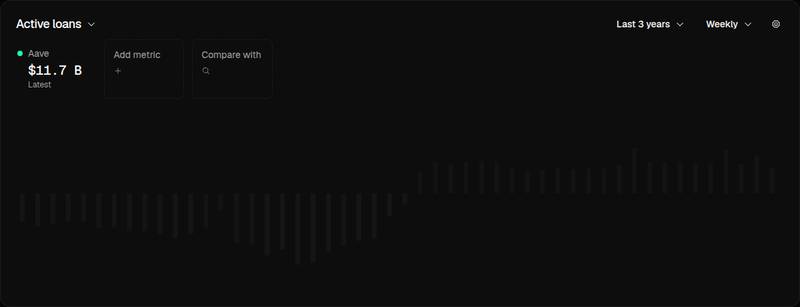
Green’s warning arrives in the context of broader DeFi governance debates about collateral quality. An rsETH incident report on Aave’s governance forum from April 2026 illustrates that LST-related risks are not theoretical; they have already produced real incidents requiring post-mortem analysis.
Potential User Concerns
For Aave depositors, looser LST parameters mean higher yield opportunities but also greater exposure to tail-risk scenarios. If an accepted LST depegs sharply, borrowers may be undercollateralized before liquidation bots can act, leaving lenders with bad debt.
The debate mirrors broader DeFi governance tensions seen in protocols like Uniswap, which recently weighed a $42M delegation loan reclaim proposal, and Hyperliquid, where treasury vehicles hold nearly 9% of the HYPE float. In each case, communities are grappling with how much risk centralized or semi-centralized decision-makers should accept on behalf of depositors.
Green’s comment also connects to how the Arbitrum Security Council itself has navigated difficult risk decisions. The council’s unprecedented move to freeze $70 million from North Korean hackers showed that DeFi governance bodies are increasingly willing to make interventionist calls when protocol security is at stake.
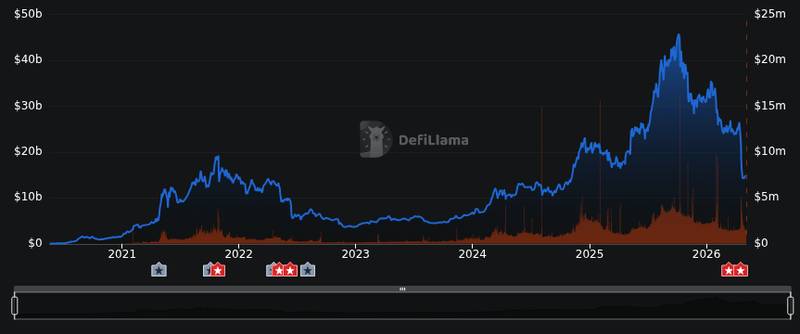
It is important to note that Green’s statement is a warning from a clip, not a report of a confirmed exploit or policy failure. No evidence suggests Aave has suffered losses directly due to its LST parameters at this time. The criticism frames an ongoing risk debate rather than documenting a realized event.
As DeFi lending protocols continue to expand their collateral menus, the tension between capital efficiency and safety margins will likely intensify. Green’s public criticism signals that governance participants with cross-protocol visibility believe the current balance at Aave leans too far toward permissiveness.
Disclaimer: This article is for informational purposes only and does not constitute financial or investment advice. Cryptocurrency and digital asset markets carry significant risk. Always do your own research before making decisions.