

AI Crypto Trading Bot Review: Execution, Custody, and Risk in 2026
Compare 3Commas, Cryptohopper, Coinrule, and Pionex by automation, pricing, custody, execution evidence, API permissions, and trading risk.


An AI crypto trading bot is worthwhile only when it turns a clearly defined strategy into traceable orders without taking more account authority than it needs. 3Commas offers the broadest exchange-connected toolkit in this comparison, Cryptohopper suits users who want strategies and a marketplace in one interface, Coinrule makes rule construction easier for non-coders, and Pionex puts bots directly inside an exchange account.
None of the four can remove market risk or guarantee that a backtest will survive live fees, slippage, latency, and changing liquidity. The right choice depends less on the word “AI” than on where funds are held, how orders are generated, what each fill costs, whether the system records failures, and how quickly the user can stop it.
What is an AI crypto trading bot?
An AI crypto trading bot is software that monitors market inputs, evaluates a trading condition and submits or recommends an order. Depending on the product, it may read price, volume and technical indicators, translate a written instruction into rules, rank possible setups or adjust parameters.
Execution normally happens through a trade-enabled exchange API, or directly inside an exchange account when the bot is built into the venue. The label does not mean every bot independently reasons about the market.
Grid, DCA and if-this-then-that bots repeatedly execute predefined instructions; an AI assistant may help create those instructions without controlling live decisions. A genuinely adaptive system places a model in the decision loop, where it can change or decline a trade according to new inputs. Users should identify which of these jobs the product performs before comparing performance claims.
Four crypto trading bots compared
Products qualified if they could automate crypto orders, expose a public product surface and provide enough pricing or execution information to inspect. We checked five things: the strategy a user can express, the role of AI at setup and runtime, where funds remain, the permissions required and the evidence available after an order succeeds or fails.
| Product | Best fit | Starting cost reviewed | Execution and custody | Main limitation |
|---|---|---|---|---|
| 3Commas | Traders managing bots across several supported exchanges | Starter: $20 monthly, or $15 per month billed annually | Trades through exchange API keys; funds remain at the connected exchange | API latency, exchange fees and plan limits still affect results |
| Cryptohopper | Users who want configurable bots, paper trading and a strategy marketplace | Explorer: $24.16 per month billed annually | Trades through connected exchange APIs without withdrawal permission | Marketplace costs and plan limits can make the real setup cost higher |
| Coinrule | Non-coders who prefer explicit if-this-then-that rules | Investor: $14.99 per month billed annually on the reviewed checkout page | Sends rule-triggered orders to connected venues | Paper behavior can diverge from live fills, and public prices vary by page |
| Pionex | Traders who want grid and rebalancing bots built into one exchange | No separate bot subscription on reviewed bot products | Funds and bot execution sit inside the Pionex exchange account | Exchange custody and repeated per-fill fees are part of the strategy risk |
The shortlist is not a return leaderboard. Bitsgap appears frequently in broader roundups, but its multi-exchange grid model overlaps with 3Commas and Pionex; it was excluded so this review could examine four different operating models rather than add another similar profile. AiCryptoCore’s Trading Mock Pro lets readers rehearse order logic before connecting an account.
Product-by-product review
3Commas: the multi-exchange control panel
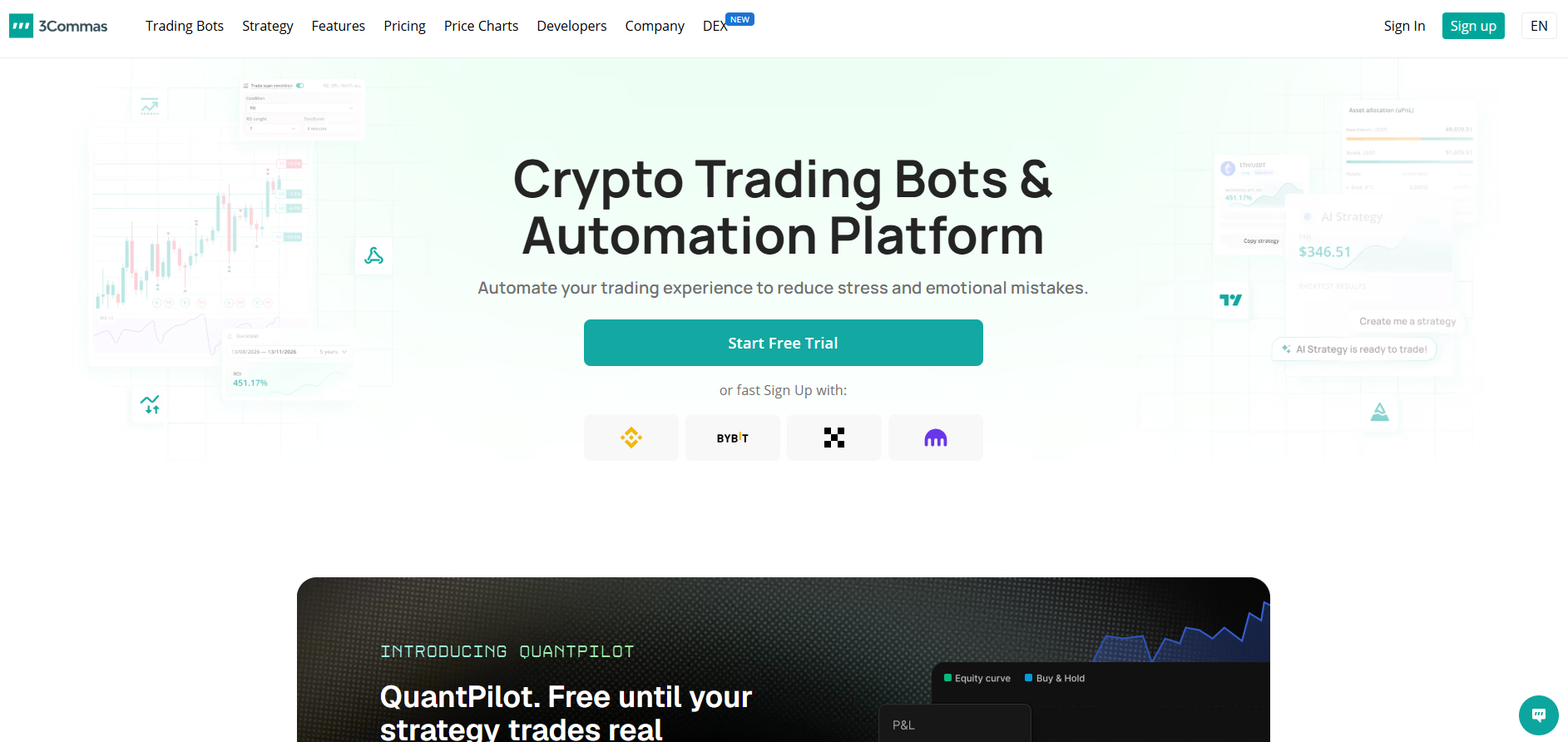
3Commas is the strongest fit here for a trader who wants to coordinate DCA, signal and grid bots across multiple exchanges without transferring assets into a separate bot wallet. Its August 2026 pricing page lists Starter at $20 monthly with one active API key, five DCA bots, two signal bots and two grid bots. Pro raises the allowance to five API keys and adds futures support, while Expert is designed for substantially larger bot fleets.
That breadth creates an operational trade-off. An exchange can reject a correct rule because of rate limits, minimum sizes, insufficient balance or a stale connection. Treat the exchange fill as the final record. A dedicated subaccount separates bot activity from manual trades and caps capital exposed to a mistake.
A 3Commas user connecting a DCA bot to Kraken asked about fees and API lag in April 2026. A reply noted that connection limits can delay frequent orders and small trades may lose their edge to fees. This exchange-specific discussion is not a platform benchmark; it supports comparing bot, order and fill timestamps before increasing capital.
Cryptohopper: strategy marketplace plus automation
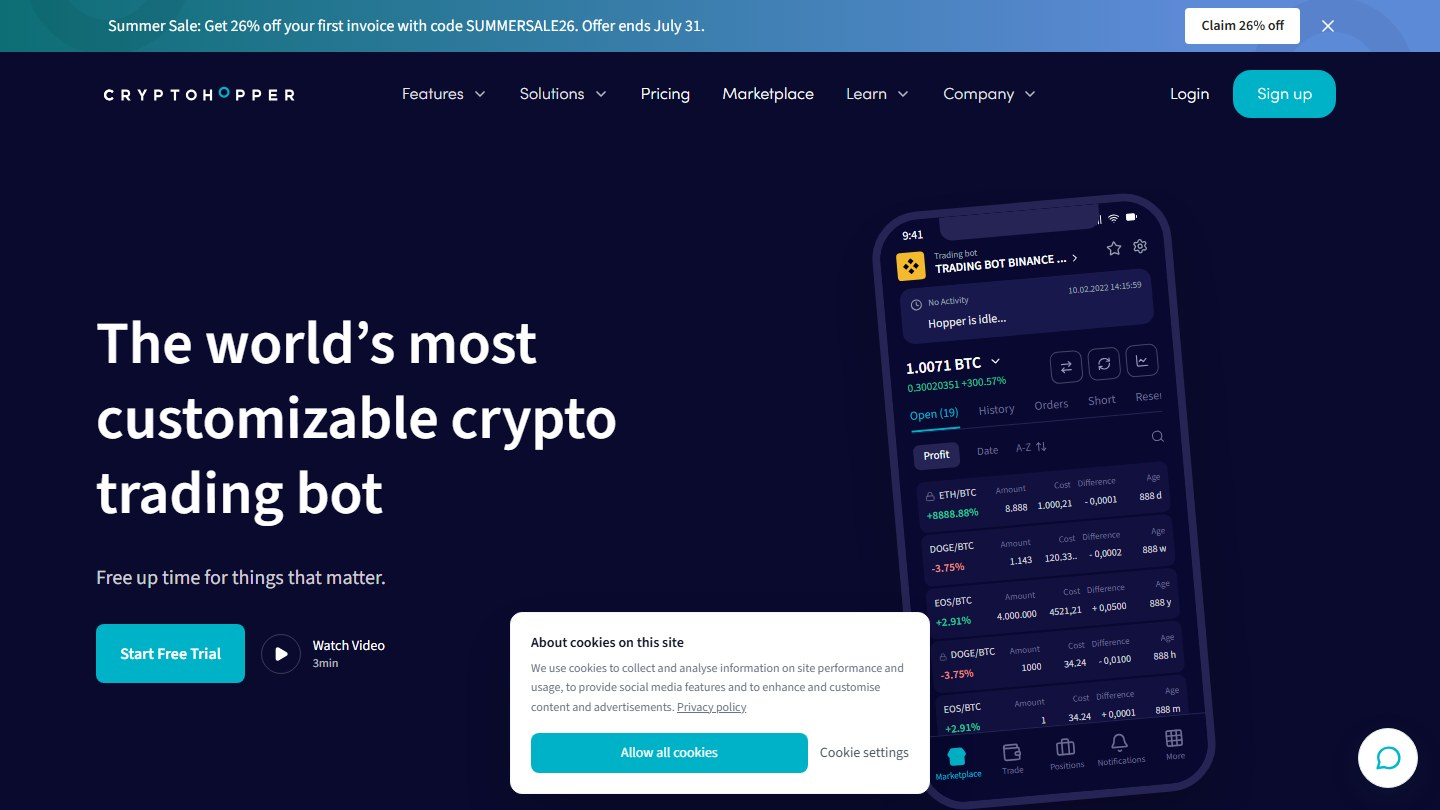
Cryptohopper is built for users who want to configure a bot, paper-trade it and optionally buy signals or templates through the same product. Its pricing page lists Explorer at $24.16 per month when billed annually, covering 15 coins, 80 open positions per exchange, a ten-minute strategy interval, paper trading and backtesting. A three-day trial is available; higher tiers shorten the interval, raise position limits and add strategy-design features.
The subscription is only one part of the cost. A marketplace strategy adds another fee and another party to assess. Inspect its full signal history, separate closed trades from open underwater positions and match the exchange, quote currency and settings intended for deployment. No-withdrawal API access still cannot prevent an illiquid trade or excessive churn.
In an April 2025 Cryptohopper discussion, users questioned backtests showing returns they could not reproduce, and one reported cancelling after live behavior diverged. These are individual reports, not a measured error rate. They support replaying entry points against market history and requiring a small live comparison before trusting a high backtest win rate.
Coinrule: readable rules for non-coders
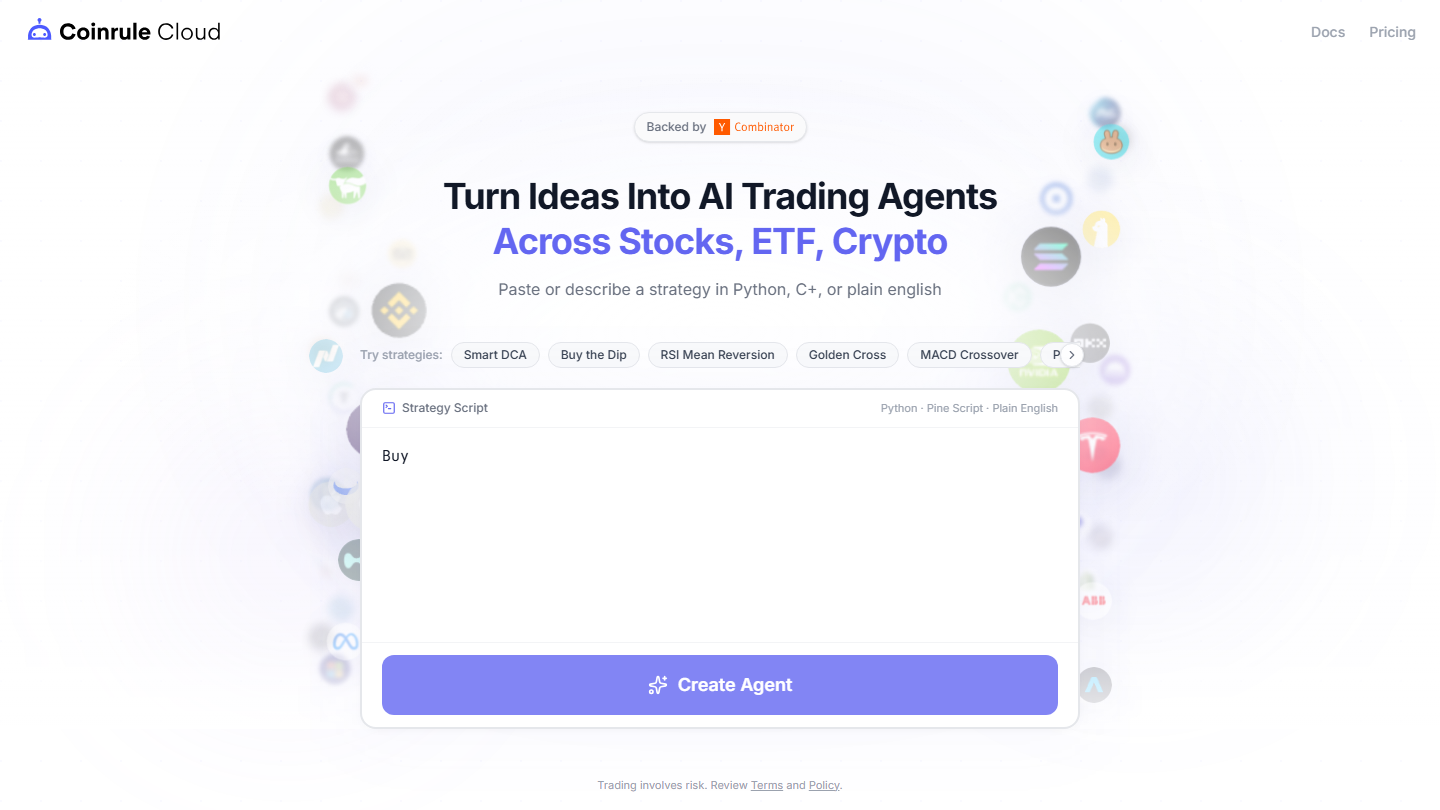
Coinrule is the clearest option in this group for expressing a strategy as explicit conditions: when a market event occurs, check the selected filters and submit a defined action. The reviewed US pricing checkout lists Investor at $14.99 per month billed annually with two live rules and one connected exchange, while Trader raises those limits and adds backtesting and risk controls.
Public Coinrule pages showed different headline prices during this review, so the checkout total and renewal period should be confirmed rather than copied from an older comparison. More importantly, readable logic does not guarantee the expected fill.
A rule may trigger correctly but encounter spread, partial execution, an exchange outage or an order rejected because the available balance changed. The event log should therefore connect each evaluated condition to the submitted order, exchange response and final position.
Coinrule’s Trustpilot profile contains conflicting June 2026 experiences: one user praised the no-code workflow, while another reported templates stopping with errors. Coinrule said free-plan limits apply and templates are not profit guarantees. Profile-level reviews are weaker than direct test logs, but they support reconciling every paper trigger with a small live order.
Pionex: bots inside the exchange account
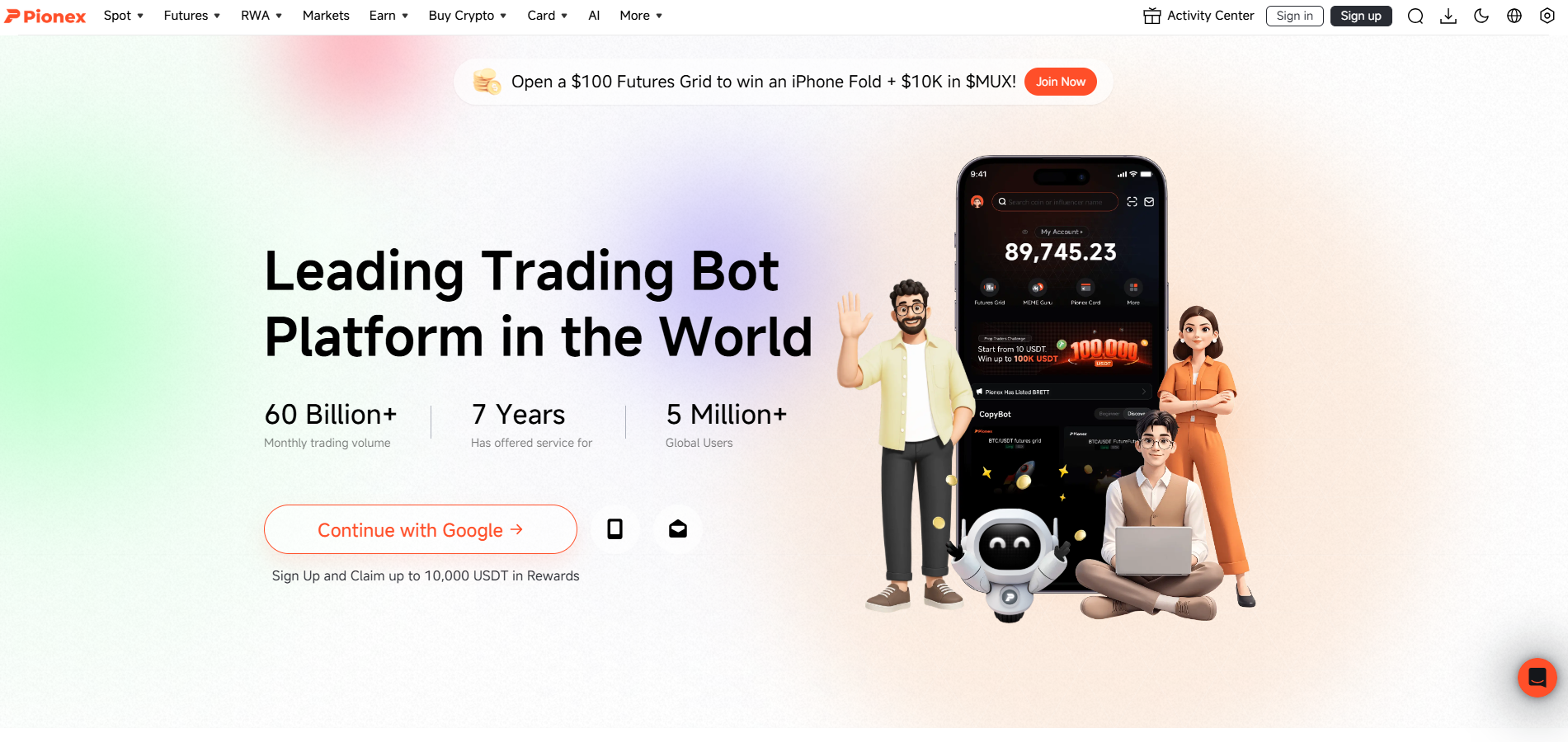
Pionex differs from the three API-connected platforms because users deposit assets with the exchange and launch built-in bots there. This reduces connection setup and removes a separate bot subscription for the reviewed products, which can make a basic grid strategy easier to launch. It also means custody, venue availability, withdrawal conditions and the bot are part of one risk decision rather than separate services.
Grid bots can look productive because they repeatedly realize small gains inside a chosen range, yet total account equity can still lag a simple hold if the asset trends strongly or falls out of range. Every fill incurs the applicable venue fee.
For example, an official Pionex fee explanation for tokenized-stock markets illustrates a 0.05% charge on each spot fill for those products, or 0.10% across a completed buy-and-sell pair before spread and market impact. Users must check the current fee for their actual crypto pair rather than generalizing that example to every market.
A Pionex user reporting a one-year $100 grid-bot experiment liked the automation, while replies questioned whether holding Bitcoin would have performed as well. The small self-reported test cannot establish profitability. It supports comparing total ending equity, including idle assets and unrealized losses, with buy-and-hold over identical dates.
AI, rules, and the execution boundary
The four products do not use AI in the same way. 3Commas adds an assistant that can translate instructions into a strategy, but configured rules govern execution. Cryptohopper applies AI-assisted strategy design and marketplace signals, while the live hopper follows selected settings. Coinrule is primarily a no-code rule engine; AI can interpret an instruction, but explicit conditions remain the control surface. Pionex grid and DCA bots are deterministic automation rather than general reasoning systems.
This differs from onchain AI agents, which may interact with smart accounts and protocols, and DeFAI systems, which can add protocol selection, simulation and wallet policy. Moving a model into the runtime decision loop expands what must be logged, limited and recoverable.
Token ownership is separate. The AI-agent coin comparison treats product use and token utility independently because a rising token cannot prove that the related automation is reliable.
Custody and API permissions
An exchange-connected bot normally needs permission to read balances and place or cancel trades. It normally does not need permission to withdraw assets. Where the exchange supports it, the safer configuration uses a dedicated subaccount, trade-only key, IP allowlist and a balance small enough that one malformed strategy cannot threaten the full portfolio.
- Read access: Let the bot inspect balances and markets before it can trade. Check that displayed positions match the venue.
- Trade access: Enable only the markets and account type the strategy requires. Futures permission should remain off for a spot-only test.
- Withdrawal access: Keep it disabled. If a product says it needs withdrawals for ordinary exchange trading, stop and verify the workflow.
- Revocation: Confirm that deleting the API key at the exchange immediately prevents new orders, even when the bot dashboard remains available.
- Custody: Record whether funds remain at a connected exchange or are deposited with the bot provider’s exchange, as with Pionex.
This is an account-security decision as much as a strategy decision. The hot-wallet versus cold-wallet guide explains why actively traded capital and long-term holdings should not share the same exposure. A bot account should contain operating capital, not the assets a user cannot afford to put at exchange, credential or software risk.
A BTC-USDT trial that exposes execution quality
A useful trial should expose execution defects rather than maximize simulated return. Configure one BTC-USDT entry and one explicit exit. Run it in paper mode across normal and volatile periods, then repeat unchanged with a small spot-only balance. Avoid leverage, martingale sizing and multiple strategies because they obscure the source of an error.
For every proposed order, preserve the signal time, market-data time, requested price and size, order submission time, exchange acknowledgement, fills, fees and final balance. Compare the proposed price with the volume-weighted fill, not merely the last displayed price. A rejected or partially filled order is valuable evidence: the system should report it, avoid assuming a position exists and prevent a later exit rule from selling assets it never bought.
The trial should also include a deliberate stop. Disable the strategy, revoke the API key at the exchange and confirm that queued actions cannot create a new order. Then compare the account’s total return with holding the same initial BTC-USDT allocation over the same period. This does not predict future performance, but it reveals whether the bot’s reported edge survives fees and whether the control surface behaves correctly when the user wants out.
Conclusion
3Commas is the most flexible multi-exchange control panel in this group, Cryptohopper combines strategy discovery with automation, Coinrule is the easiest to inspect as readable rules, and Pionex offers the lowest-friction built-in bot experience at the cost of placing custody and execution with one venue. Those are operating differences, not promises of higher returns.
The strongest candidate is the one whose permissions, order lifecycle, costs and stop behavior can be reproduced with a small account. Choose the custody model first, verify the exact plan and venue fees, and require complete fills rather than a profit screenshot. If the bot cannot explain a rejected order or survive key revocation cleanly, its backtest score is secondary.
Frequently asked questions
Can an AI crypto trading bot guarantee profit?
No. A bot can apply rules consistently, but market direction, liquidity, spread, fees, latency and configuration errors still determine the outcome. Historical or paper results do not guarantee a live return.
Which bot is best for a beginner?
Coinrule has the clearest rule-building model for non-coders, while Pionex removes the separate API-connection step. Beginners should choose spot-only trading, avoid leverage and prove that stop and revocation controls work with a small balance.
Should a trading bot have withdrawal permission?
Ordinary exchange trading normally requires read and trade permissions, not withdrawals. Disable withdrawals, use a dedicated subaccount where possible and revoke the key directly at the exchange when the trial ends.
Are grid-bot profits the same as portfolio returns?
No. Grid profit measures completed trades inside the configured range, while total portfolio return also reflects the value of held assets, unrealized losses, fees and opportunity cost. Compare ending equity with a passive benchmark over identical dates.
Disclaimer:
The information provided on AiCryptoCore.com is for educational and informational purposes only and does not constitute financial, investment, or trading advice. Cryptocurrency investments involve risk and may result in financial loss. Always conduct your own research and consult with a qualified financial advisor before making any investment decisions.