Best AI Agent Crypto Coins in 2026: Platforms, Utility, and Risk
Compare Bittensor, Virtuals, Fetch.ai, and ASI by agent product role, token utility, operating evidence, and key risks in 2026.

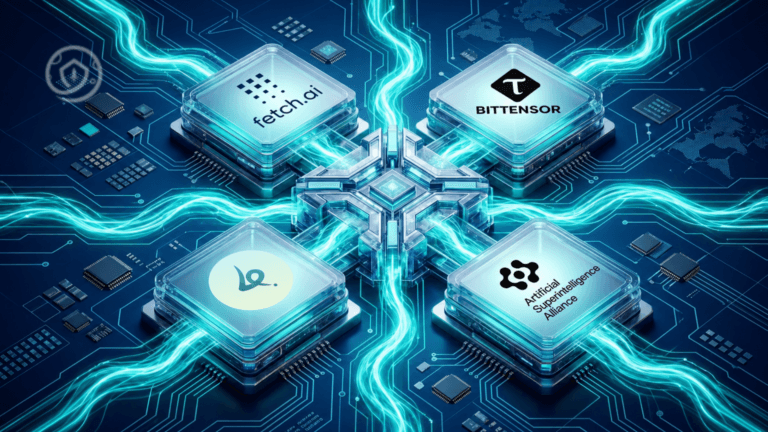
Bittensor is the strongest AI-agent coin in this shortlist for readers seeking a token embedded in a market for specialized machine-intelligence work. Virtuals is the clearest agent-distribution exposure, Fetch.ai is the clearest agent-service exposure, and the Artificial Superintelligence Alliance is the broadest coalition exposure with the least direct attribution.
These are not interchangeable AI tokens. Bittensor depends on useful subnet output, Virtuals on durable demand for deployed agents, Fetch.ai on completed services, and ASI on meaningful integration across its component ecosystems. The best AI crypto projects overview provides the broader market context, but the best choice here follows the operating model a reader wants to study, not the loudest AI narrative.
Best AI Agent Crypto Coins in 2026
| Project | Product role | Token role to examine | Evidence that matters |
|---|---|---|---|
| Bittensor | Market for specialized machine-intelligence tasks | Subnet registration, staking, emissions, and participation | Reproducible output, validator method, outside demand |
| Virtuals Protocol | Agent creation and distribution platform | Platform and agent-market coordination | Repeat use, visible agent output, durable activity |
| Fetch.ai | Agent-service and machine-economy platform | Coordination and operator incentives | Completed request, delivery record, developer activity |
| ASI Alliance | Coalition spanning agent, data, and compute initiatives | Shared access and settlement across components | Cross-product use, shared workflow, attributable demand |
The table is a research shortlist, not a price ranking. A reader studying autonomous services should not use the same evidence standard as a reader studying a subnet market. The Top Projects hub gives a wider navigation layer, while the profiles below explain the operating boundary for each project before the scorecard compares them.
Project-by-project analysis
Bittensor
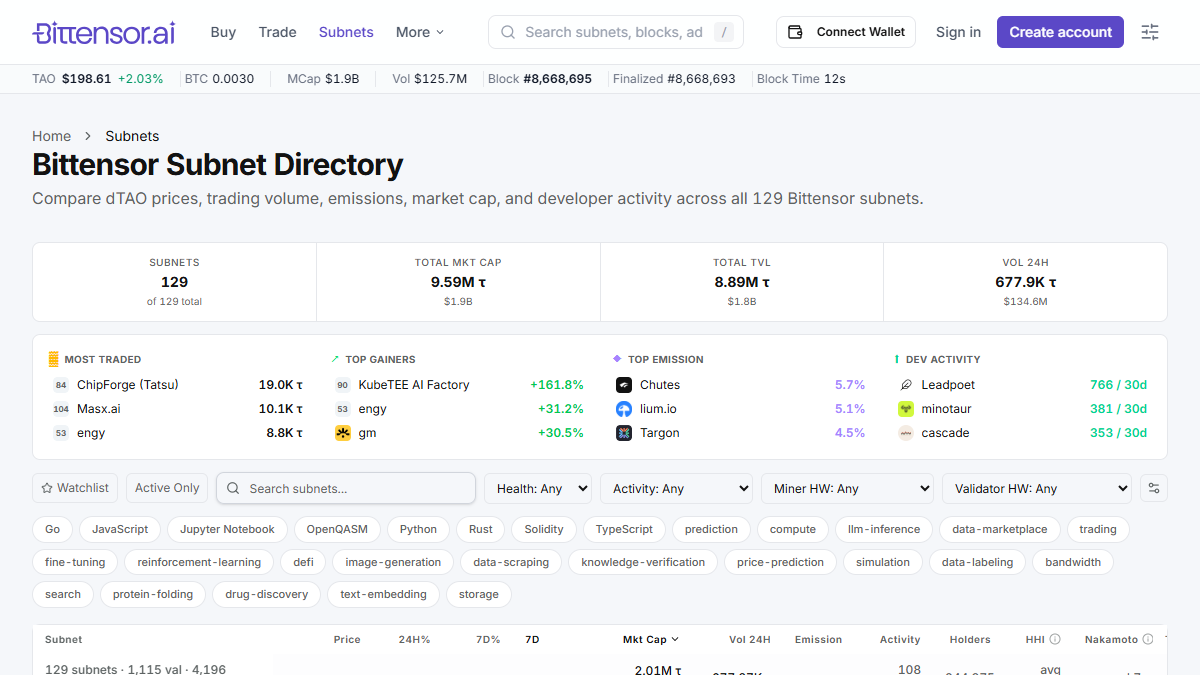
Bittensor is not one agent application. It is a market where specialized machine-intelligence tasks compete for emissions and validator attention. The relevant unit is a subnet, its task definition, the output miners produce, the scoring method, and the person or organization that benefits from the output.
TAO has a more direct coordination role than many narrative tokens because participation, registration, staking, and emissions are part of the network design. That does not make every subnet equally strong. A subnet can attract miners and still fail to produce a result that an outside buyer wants to pay for.
The strongest Bittensor evidence is task-specific: a dated output sample, a transparent validator method, a reproducible benchmark, and a clear customer path. The main risk is internal optimization, where incentives improve a subnet score without improving a useful commercial or scientific result. The Bittensor subnet guide is the next read for subnet-level diligence.
Virtuals Protocol
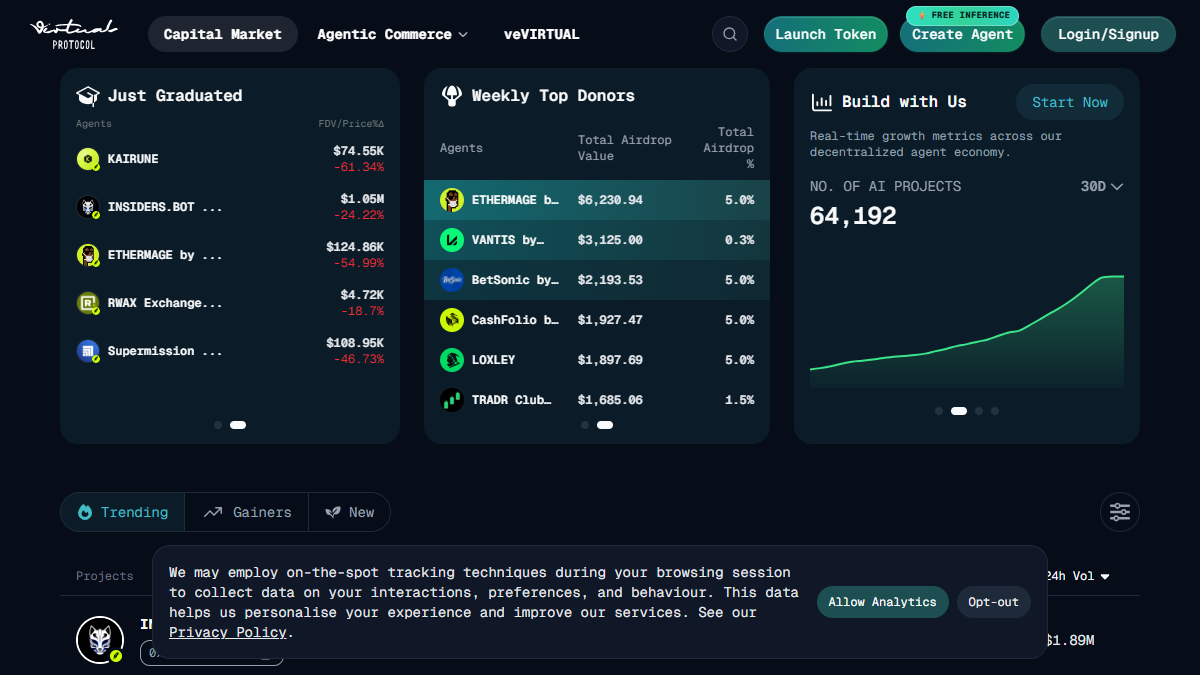
Virtuals is a distribution-layer exposure. Its product surface makes it easier to study how an agent is created, discovered, presented to users, and connected to a market. That is distinct from proving that the agent itself performs a valuable task after launch attention fades.
The useful unit of evidence is one agent with a defined job, a visible output, and a reason for users to return. Launch volume can demonstrate that a platform attracts creators, but it does not show that the resulting agents have retained users, paid work, or a token role beyond speculation.
Virtuals belongs on a watchlist when platform activity is observable and at least some agents can be evaluated as products. Its main risk is attention concentration: a small number of liquid names can make the ecosystem look deeper than its underlying user demand. The Altcoin Insights archive can provide market context, but it should not be confused with agent-level evidence.
Fetch.ai
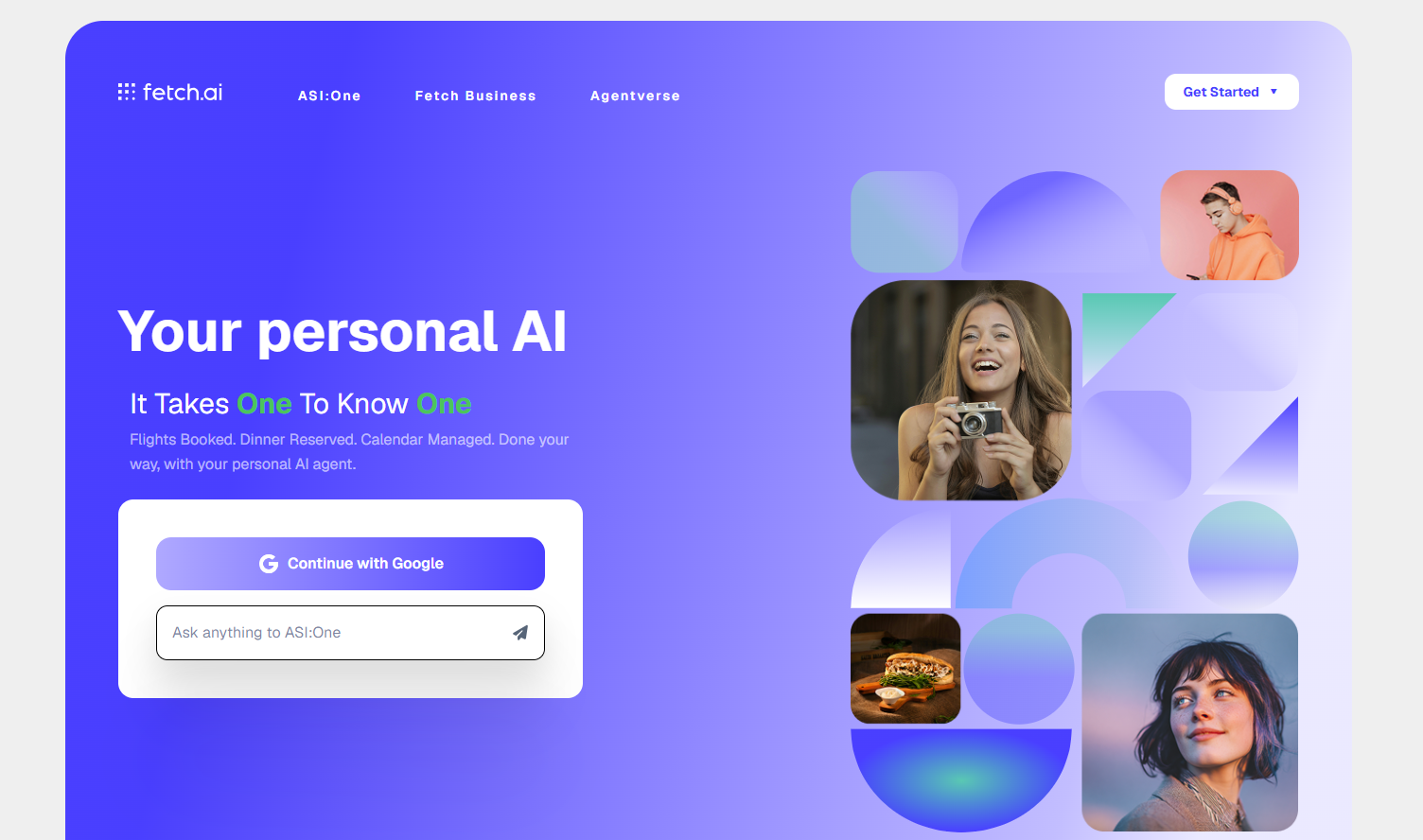
Fetch.ai belongs to the service-coordination side of the agent thesis. Its relevant product path starts with discovery, continues through a service request, and ends with a deliverable result. That sequence is more useful than a generic integration list because it gives the reader a place to observe value being created.
The strongest implementation shows the task submitted, the service called, the result returned, and the failure boundary. A service can be useful before its token becomes central to settlement, but the article should then state that the token role is partial rather than implying that every agent interaction creates asset demand.
Fetch.ai earns a place in the shortlist when the user journey is visible and repeatable. The main risk is that announced integrations, ecosystem terms, and token narratives can advance faster than the number of services a user can actually invoke and verify. A completed request with a clear delivery record carries more weight than a partner logo.
Artificial Superintelligence Alliance
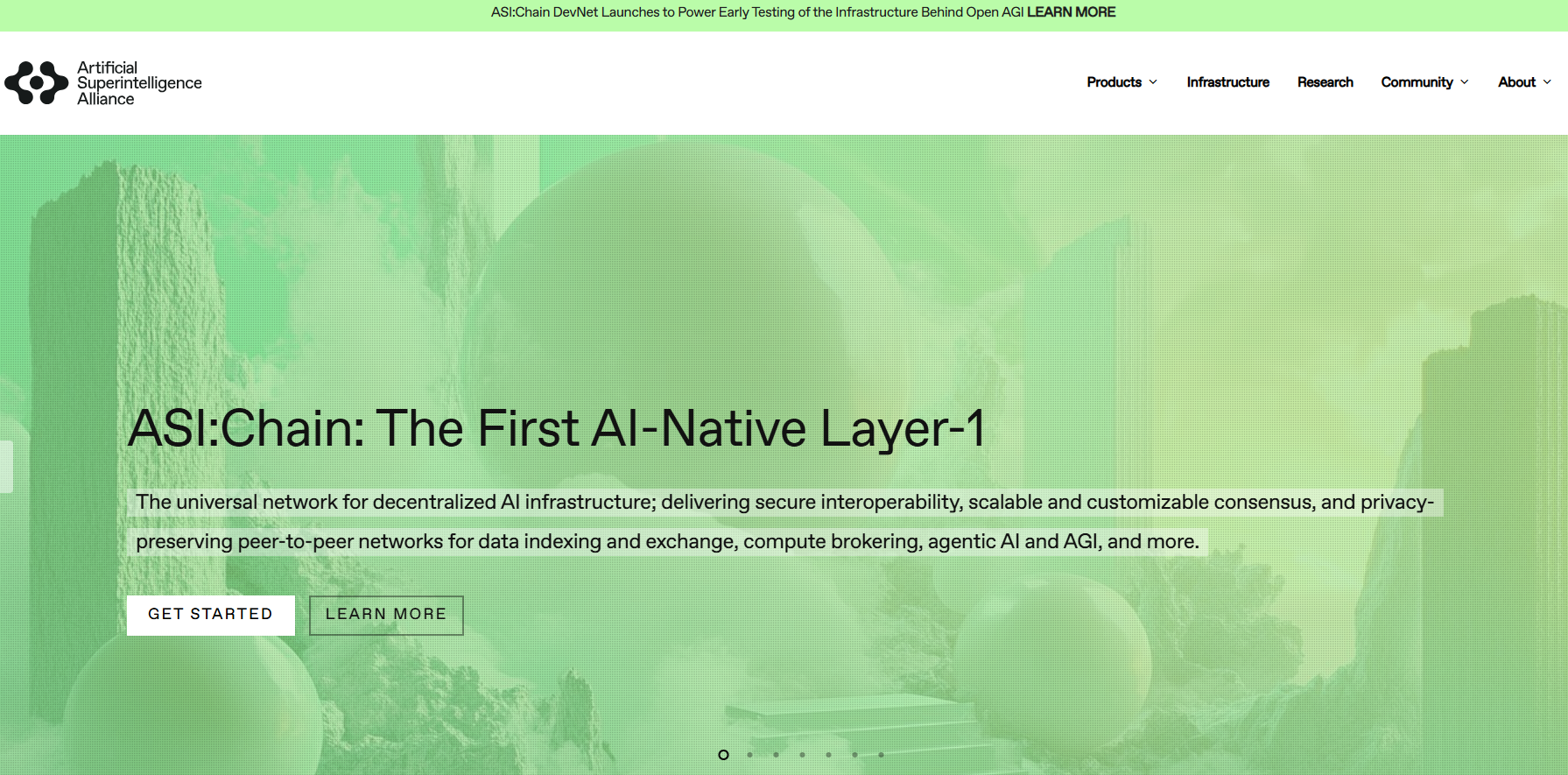
The Artificial Superintelligence Alliance is a coalition thesis rather than a narrow product thesis. Its value proposition spans agent, data, and compute initiatives, creating multiple possible routes for shared utility. The cost of that breadth is attribution: the reader needs to see which component produced activity and how the shared asset participates in that activity.
The strongest version of the ASI thesis is a working path across components: a user or developer accesses a service, a component creates value, and the wider ecosystem contributes a necessary capability or settlement role. A shared brand, a combined roadmap, or a common ticker does not establish this operating integration by itself.
ASI is the highest-uncertainty candidate in this group because its upside depends on compounding between several organizations and products. Its failure mode is operational separation: components retain their own users and workflows while the shared token remains a broad narrative wrapper. The profile improves only when cross-product use becomes visible.
Research scorecard
The scorecard follows the profiles so every number has a visible operating context. It is editorial triage, not an investment rating.
| Project | Agent utility | Token role | Product evidence | Main risk | Total |
|---|---|---|---|---|---|
| Bittensor | 9 | 9 | 8 | Uneven subnet quality and emissions pressure | 26/30 |
| Virtuals Protocol | 8 | 8 | 7 | Attention and liquidity concentration | 23/30 |
| Fetch.ai | 8 | 7 | 7 | Integration claims may outpace usage | 22/30 |
| ASI Alliance | 7 | 7 | 6 | Broad coalition with difficult attribution | 20/30 |
Bittensor leads because its token is closest to the network’s core coordination mechanism, while the evidence burden remains subnet-specific. Virtuals and Fetch.ai have clearer product paths for agent distribution and services, but both still need durable activity beyond launch or integration announcements. ASI carries the broadest architecture claim and the largest attribution burden.
Evidence that changes the shortlist
| Project | Evidence that supports the profile | Evidence that lowers conviction |
|---|---|---|
| Bittensor | Reproducible subnet output, transparent scoring, and outside demand | Emissions or internal scores without a buyer for the output |
| Virtuals Protocol | Repeat agent use with a visible task and token-linked activity | Launch volume without retained users or product output |
| Fetch.ai | Completed service requests with a clear delivery record | Integration announcements without observable service activity |
| ASI Alliance | Shared product access and measured activity across components | Separate products sharing a brand but not an operating workflow |
This table is the practical filter for the article. Token liquidity, social attention, and a future TGE can be relevant market facts, but they do not replace product output, delivery records, or a defined role for the asset. The organic demand checker provides a practical way to record repeat-use signals alongside the qualitative review.
Conclusion
Bittensor is the most direct choice for a reader studying tokenized coordination of specialized machine-intelligence work. Virtuals suits research into agent distribution, Fetch.ai suits research into service coordination, and ASI suits research into a broad coalition with higher integration risk. Each belongs on a different research path, and the AI infrastructure coin guide provides the separate compute and delivery context those agent models rely on.
The next action is to verify the specific evidence in the table for the chosen exposure. A project remains a watchlist candidate when its product output, token role, or failure boundary cannot yet be observed. That is a stronger conclusion than forcing four different operating models into one generic AI-token ranking.
Readers assessing Bittensor’s operating evidence can move from this shortlist to the Bittensor subnet analysis and the AI agent token utility guide, which separate task-level incentives from token design.
Frequently asked questions
Which AI agent coin is the strongest on this shortlist?
Bittensor has the clearest token-to-network coordination link, but its quality must be checked subnet by subnet. It is not a blanket endorsement of every subnet or market condition.
Are Virtuals and Fetch.ai the same type of exposure?
No. Virtuals is primarily a platform and distribution exposure, while Fetch.ai is primarily a service-coordination exposure. Their evidence should be compared through different user workflows.
Does a planned TGE prove agent demand?
No. A TGE describes token distribution. Agent demand requires observable output, repeat use, delivery records, or paid service activity.
Why does the ASI Alliance carry higher uncertainty?
Its thesis depends on meaningful integration across several components. A common brand and token do not establish shared product demand without a visible operating workflow.
Disclaimer:
The information provided on AiCryptoCore.com is for educational and informational purposes only and does not constitute financial, investment, or trading advice. Cryptocurrency investments involve risk and may result in financial loss. Always conduct your own research and consult with a qualified financial advisor before making any investment decisions.