Sui Foundation Says Two Bugs Triggered Three Mainnet Halts Thumbnail
The Sui Foundation has attributed three recent mainnet halts to two separate bugs, raising fresh questions about the Layer 1 blockchain’s network reliability and incident response as it competes for developer mindshare.
What Sui Foundation Said About the Bugs Behind the Halts
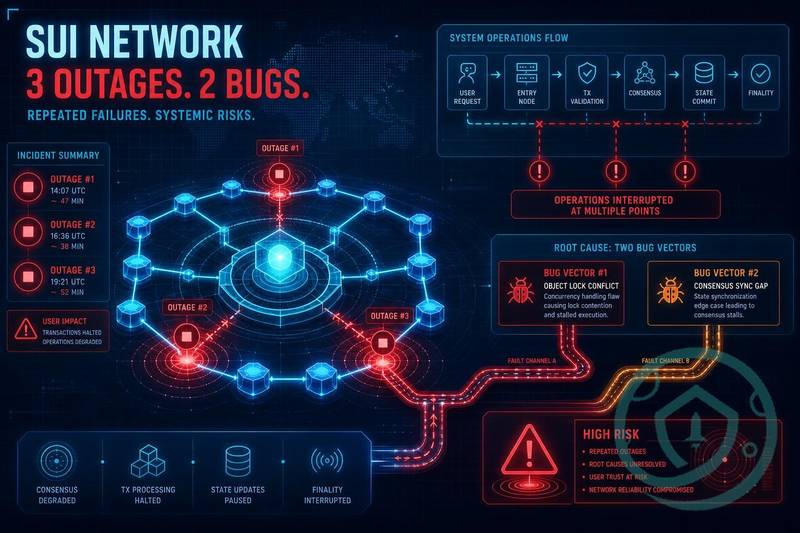
In a blog post detailing the incidents, the Sui Foundation explained that two distinct software bugs were responsible for three separate mainnet outages. The disclosure clarified that the repeated disruptions stemmed from independent problems that surfaced in close succession, not a single unresolved flaw.
The distinction is significant. A single bug causing multiple halts would suggest an incomplete fix, while two separate bugs point to broader quality assurance gaps in the network’s codebase. The Foundation indicated that a major upgrade was deployed to address both root causes.
Sui’s most recent outage was reported on May 28, when transactions on the network ground to a halt. That incident followed two earlier disruptions in quick succession, creating a pattern that drew scrutiny from users and builders across the ecosystem.
Why Repeated Mainnet Halts Matter for Sui Users and Builders
Each mainnet halt freezes all on-chain activity: transactions, DeFi operations, and smart contract executions stop until validators coordinate a restart. For protocols built on Sui, three halts in a short window introduce operational risk that extends well beyond temporary inconvenience.
Developers evaluating where to deploy applications weigh network uptime heavily. Repeated outages can erode confidence among builders and users alike, particularly as institutional players increasingly scrutinize blockchain infrastructure before committing capital. The pattern also complicates matters for exchanges, which may face pressure from users when deposits and withdrawals are disrupted, similar to the kind of operational reliability questions that arise when platforms expand into new markets.
The Foundation’s public disclosure signals active incident review, a step that transparency-minded observers generally view as constructive. In an industry where enforcement actions and accountability measures are gaining momentum, clear post-incident communication can help preserve credibility even after reliability failures.
However, the fact that two separate bugs reached production suggests that pre-deployment testing and validation processes may need strengthening. For a network positioning itself as a high-performance Layer 1, the gap between ambition and execution on stability is a concern that the Sui Foundation will need to address through sustained engineering improvements, not just a single upgrade cycle.
Disclaimer: This article is for informational purposes only and does not constitute financial or investment advice. Cryptocurrency and digital asset markets carry significant risk. Always do your own research before making decisions.