
Yang Haipo Bitcoin and cryptocurrency have reached the endgame is the headline circulating through crypto channels, but the accessible English record supports a narrower claim: CoinEx CEO Haipo Yang has argued that the sector is entering a smarter, more professional stage of competition, a framing that sounds more like market maturity than a literal final chapter for Bitcoin.
Key Points
- Accessible English sources do not show the exact “Bitcoin and cryptocurrency have reached the endgame” wording.
- CoinEx’s verified public statement framed Yang’s view around smarter, more professional exchange competition.
- Bitcoin’s current market scale helps explain why a competition shift toward tooling, custody, and automation matters now.
The March 13, 2025 CoinEx release distributed via GlobeNewswire titled Yang’s remarks “Advancing Towards a Smarter and More Professional Crypto Trading Era.” That verified source did not use the word “endgame,” so the headline is better read as a compressed interpretation of Yang’s market thesis than as a confirmed direct quote.
What the verified record actually says
According to unconfirmed reports that circulated with the headline, Yang was described as the founder of CoinEx and ViaBTC and the sharper “endgame” wording was attached to his comments. The accessible English materials independently confirm his leadership role at CoinEx, but they do not independently confirm the ViaBTC founder label or the exact phrase used in the headline.
The verified release instead said CoinEx adopted the slogan “Your Crypto Trading Expert” and plans to launch CoinEx Vault. Yang was directly quoted in the same statement saying exchange competition is “no longer just about trading volume” and is shifting toward smarter, more professional services.
The company used operating scale to support that argument, saying it made 25 major product upgrades in 2024 and supports more than 1,300 cryptocurrencies across 1,900+ trading markets. Those metrics matter because an exchange working at that scale is making a case for specialization in custody, execution quality, and account tooling rather than competing only on raw listing count.
That shift fits a broader pressure on crypto venues to look more robust after market-stress episodes such as Tether’s $127.5M commitment to support Drift Protocol recovery and the legal scrutiny hanging over centralized exchange leadership in AI Crypto Core’s review of CZ’s guilty plea in the United States. In that context, Yang’s language reads less like hype and more like an operator arguing that the next competitive layer is infrastructure discipline.
Why the thesis matters at bitcoin’s current scale
A March 3, 2025 English secondary account carried by Mitrade with BeInCrypto sourcing expressed the same idea more plainly, saying exchanges now compete on “technology innovation, service depth, and continuous optimization” and that “The future crypto market will become more intelligent.” That language points to deeper specialization and automation, which is much closer to an industry end-state thesis than a claim that Bitcoin itself has stopped evolving.
For AI-crypto infrastructure readers, the operative phrase is Yang’s focus on smarter services rather than volume alone. If the differentiator is service depth instead of throughput, the practical battleground becomes automated risk controls, higher-context trading interfaces, and custody layers such as CoinEx Vault, which is where machine-assisted trading and exchange infrastructure start to overlap in a concrete way.
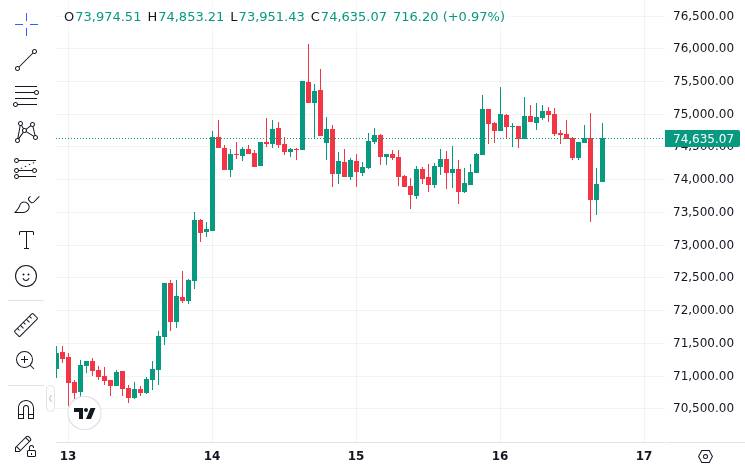
Bitcoin was trading near $74,664, with a market capitalization of about $1.49 trillion and 24-hour volume of roughly $43.5 billion at the time this draft was prepared. That combination of price, capitalization, and liquidity is why Yang’s maturity argument carries weight: markets that large usually compete on execution quality, product depth, and trust architecture, not only on growth slogans.
Even so, scale is not the same as completion. AI Crypto Core recently argued that buying coffee with Bitcoin in the US could mean 70 pages of taxes, a reminder that capital-market maturity can coexist with unresolved consumer-friction and policy costs.
That is also why the literal headline still needs caution. The public English sources support a story about professionalization, consolidation, and smarter exchange services, but they do not prove that bitcoin and crypto have reached any objective endpoint or universal market consensus.
What readers should watch next
The March 13, 2025 release gives one concrete signal to monitor: whether CoinEx Vault launches as part of the smarter-services roadmap Yang described. A product rollout would convert the thesis from branding language into something readers can evaluate as an actual exchange capability.
The second signal is whether future interviews, company posts, or public transcripts publish the exact “endgame” wording in a verifiable format. Until that happens, the safest reading is that Yang is arguing crypto has entered a late-stage competition era defined by professional services, not that the industry’s development is complete.
Disclaimer: This article is for informational purposes only and does not constitute financial or investment advice. Cryptocurrency and digital asset markets carry significant risk. Always do your own research before making decisions.